Thailand, Singapore and Malaysia Budget Itinerary from Adelaide
Arrival and riverside evening in Bangkok
- Flight from Adelaide to Bangkok — Adelaide → Bangkok, arrive late afternoon or evening; allow 12–16 hours including connections and use airport rail/taxi to your hotel.
- Wat Arun — Thonburi, early evening, ~1 hour; enjoy the riverside temple at sunset.
- Tha Tien riverside promenade — Old Town, evening, ~45 minutes; atmospheric views across the Chao Phraya.
- The Deck by Arun Residence — Tha Tien, dinner, ~1.5 hours; book a river-view table, with meals roughly ฿400–900 per person.
Arrival in Bangkok
Allow roughly 12–16 hours for the journey from Adelaide Airport to Suvarnabhumi Airport, depending on your connection. After immigration and luggage collection, take the Airport Rail Link to Phaya Thai—about 30 minutes and around ฿45—then continue by taxi or Grab to your hotel. A direct taxi from the airport is easier with luggage; use the official taxi queue, insist on the meter, and allow 45–75 minutes to the riverside depending on traffic. If you land late, check that your accommodation accepts after-hours arrivals and keep some Thai baht handy.
Early Evening by the River
Once checked in, head to Wat Arun in Thonburi for sunset, ideally arriving around 5:00–5:30 pm. From the Old Town side, take the short cross-river ferry from Tha Tien Pier—usually only a few baht and a few minutes—or use a Grab if you are staying elsewhere. Wat Arun is open into the early evening, but entry times and sunset access can vary; dress with shoulders and knees covered, and be prepared for warm, humid conditions. Give yourself about an hour to wander the temple grounds and admire the porcelain-covered central prang as the light softens.
Afterwards, return across the river and stroll along the Tha Tien riverside promenade for around 45 minutes. This is a lovely, unhurried introduction to Bangkok: watch the ferries cross the Chao Phraya, see the temple illuminated opposite, and browse the small evening stalls around the pier. Finish with dinner at The Deck by Arun Residence, where the river-view tables are particularly special after dark. Reserve ahead and request an outdoor or window table; expect roughly ฿400–900 per person before drinks. It is worth treating this as your first celebratory meal rather than rushing into more sightseeing—then take a Grab back to your hotel, as Bangkok’s riverside lanes can be confusing after dark.
Bangkok temples and markets
- Grand Palace — Rattanakosin, morning, ~2 hours; Bangkok’s essential royal complex.
- Wat Phra Kaew — Grand Palace complex, morning, ~1 hour; see Thailand’s most revered Emerald Buddha.
- Wat Pho — Rattanakosin, late morning, ~1.5 hours; admire the reclining Buddha and traditional massage heritage.
- Khaosan Road — Banglamphu, afternoon, ~1 hour; browse lively stalls and backpacker culture.
- Thipsamai Pad Thai — Samran Rat, dinner, ~1 hour; try a renowned local pad thai, roughly ฿150–300 per person.
Morning: Grand Palace and Wat Phra Kaew
Start early at the Grand Palace, ideally arriving around 8:30am before the heat and tour groups build. Allow about two hours to explore the courtyards, golden stupas and ceremonial buildings, then spend another hour at Wat Phra Kaew, within the same complex, to see the revered Emerald Buddha. The combined admission is usually around ฿500, with opening generally from 8:30am to 4:30pm. Wear clothing covering your shoulders and knees; a light scarf is useful, but avoid relying on see-through or tight clothes. From central Bangkok, a Grab or metered taxi is simplest, while the Chao Phraya Express Boat to Tha Chang pier is a more atmospheric option.
Late Morning: Wat Pho
Walk roughly 10 minutes south to Wat Pho, entering before midday if possible. Give yourself around 90 minutes to see the enormous reclining Buddha, tiled courtyards and quiet chapel murals. Admission is typically about ฿300, and the temple normally opens from 8:00am to 6:30pm. This is also one of Bangkok’s traditional massage schools, so a short Thai massage can be a good add-on if your feet are already feeling the sightseeing; book at the temple rather than accepting offers from people outside.
Afternoon and Evening: Khaosan Road and Thipsamai Pad Thai
After lunch somewhere around Tha Tien, take a short taxi or Grab ride—or walk about 25 minutes—to Khaosan Road in Banglamphu. Visit in the late afternoon, when the market atmosphere is beginning but the street is not yet at its loudest, and allow an hour to browse stalls and nearby lanes such as Rambuttri. Keep phones and wallets secure, and agree on a fare or use the meter for taxis. For dinner, continue by Grab or walk roughly 20 minutes east to Thipsamai Pad Thai in Samran Rat. Expect a queue and prices around ฿150–300 per person; the signature pad thai wrapped in egg is filling, so one dish each plus a shared side is usually enough. It commonly opens from late afternoon into the evening, but check the hours close to your visit, as Bangkok restaurants sometimes adjust schedules.
Bangkok neighbourhoods and street food
- Jim Thompson House Museum — Pathum Wan, morning, ~1.5 hours; explore traditional Thai houses and silk history.
- MBK Center — Pathum Wan, late morning, ~1.5 hours; useful for affordable shopping and local snacks.
- Talad Noi — Charoen Krung, afternoon, ~2 hours; wander murals, shrines, and old Chinese-Thai lanes.
- Yaowarat Road — Chinatown, evening, ~2 hours; Bangkok’s classic street-food corridor.
- Nai Ek Roll Noodles — Chinatown, dinner, ~1 hour; inexpensive peppery pork-and-noodle soup, roughly ฿100–250 per person.
Morning
Begin at Jim Thompson House Museum in Wang Mai, opening around 10:00am. The museum’s traditional teak houses, tropical gardens and silk collection make a calmer start than Bangkok’s major temples; allow about 90 minutes. Entry is roughly ฿200–300, and the nearest BTS stop is National Stadium—walk about 10 minutes, or take a short taxi ride if the heat is already building. Afterward, walk to MBK Center, which is directly beside the station. Spend around 1–1½ hours browsing inexpensive clothing, electronics and souvenirs, with plenty of snack counters and Thai food on the lower levels; prices are generally better than at tourist-focused malls, but compare electronics carefully and keep receipts.
Afternoon and Evening
Take the MRT or a metered taxi towards Talad Noi—from National Stadium, allow roughly 25–35 minutes depending on traffic. Start around Charoen Krung Road and wander slowly through the old Chinese-Thai lanes, looking for painted walls, small shrines and weathered shophouses around Soi Charoen Krung 22. The neighbourhood is best treated as an unhurried walk rather than a checklist; wear comfortable shoes and expect uneven pavements. Many small galleries and cafés close by late afternoon, so arriving around 3:00pm works well. Continue into Yaowarat Road after sunset, when the neon signs come on and the street-food stalls become the main attraction. Walk the central stretch near Wat Mangkon station, stopping for fruit, grilled seafood or roast meats as you browse. Finish with dinner at Nai Ek Roll Noodles, a Chinatown institution known for peppery pork-and-noodle soup; expect roughly ฿100–250 per person, and be prepared for a simple, busy setting rather than a leisurely restaurant meal. From Wat Mangkon MRT, your hotel is easiest by MRT or Grab, since taxis around Yaowarat can be slow during the evening rush.
Travel to Chiang Mai
- Overnight train from Bangkok to Chiang Mai — Krung Thep Aphiwat Central Terminal → Chiang Mai, depart early morning or previous night; allow about 11–13 hours, with reserved second-class sleeper berths recommended.
- Chiang Mai Old City check-in and rest — Old City, afternoon, ~2 hours; keep the first afternoon light after the long journey.
- Wat Chedi Luang — Old City, late afternoon, ~1 hour; see the landmark ruined chedi.
- Chiang Mai Gate Market — South Old City, evening, ~1.5 hours; sample inexpensive northern Thai dishes, roughly ฿100–250 per person.
Morning and Arrival
Your overnight sleeper should bring you into Chiang Mai Railway Station in the morning, usually after 11–13 hours on the train. Take a metered taxi or Grab into the Old City—allow around 15–25 minutes depending on traffic—and ask your accommodation to store your bags if the room is not ready. Keep the first couple of hours deliberately slow: have coffee at Akha Ama Coffee on Ratchadamnoen Road, then check in and rest. The long train is part of the adventure, but you will enjoy Chiang Mai much more after a shower and a proper break.
Late Afternoon: Old City and Wat Chedi Luang
After resting, wander the quiet lanes of the Old City rather than trying to fit in several temples. Head to Wat Chedi Luang, a roughly 10-minute walk from most central guesthouses. The enormous brick chedi is especially atmospheric in the softer late-afternoon light; allow about an hour, with admission usually around ฿50. Dress with shoulders and knees covered, and check the posted closing time—temple hours can vary, but it commonly closes around 5pm. If you arrive too early, sit briefly in the temple grounds or browse the small craft shops along Rachadamnoen Road before entering.
Evening: Chiang Mai Gate Market
From Wat Chedi Luang, walk south for about 15 minutes to Chiang Mai Gate Market, one of the easiest places to have a relaxed first-night meal. Come around 6pm, when the food stalls are in full swing, and share small plates of khao soi, sai ua sausage, grilled meats, fried snacks and sticky rice. Allow roughly ฿100–250 per person for a generous dinner; carry small notes and choose busy stalls where food is cooked continuously. After eating, take a short stroll around the market rather than adding another major sight—then use Grab or walk back to your accommodation, keeping the evening early ahead of tomorrow’s Old City exploring.
Chiang Mai old town
- Wat Phra Singh — Old City, morning, ~1 hour; visit one of Chiang Mai’s finest Lanna temples.
- Wat Chiang Man — Old City, late morning, ~1 hour; explore the city’s oldest temple.
- Three Kings Monument — Old City, midday, ~30 minutes; understand Chiang Mai’s founding story.
- Khao Soi Khun Yai — North Old City, lunch, ~1 hour; try classic khao soi for roughly ฿80–180 per person.
- Wat Lok Moli — North moat, afternoon, ~1 hour; enjoy a quieter historic temple.
- Sunday Walking Street — Ratchadamnoen Road, evening, ~2 hours; browse crafts and snacks if operating on this date.
Morning
Start around 8:00am at Wat Phra Singh, one of Chiang Mai’s finest Lanna temples. The main viharn and golden details are especially peaceful before tour groups arrive; allow about an hour. Entry is usually free for the temple grounds, though a small donation is appreciated. From here, walk roughly 15 minutes through the Old City to Wat Chiang Man, the city’s oldest temple, where the stone elephant chedis and quieter courtyard are worth taking your time over.
Continue on foot to Three Kings Monument, about 10 minutes away, arriving around late morning. The open square is a useful place to pause and understand the story of Chiang Mai’s founding, with the nearby Chiang Mai City Arts & Cultural Centre if you want more historical context. Keep this stop to around 30 minutes, as the midday heat builds quickly; carry water and use the shaded lanes around the monument rather than walking along the busiest roads.
Lunch and Afternoon
For lunch, walk or take a short Grab ride north to Khao Soi Khun Yai, near the north side of the Old City. Order the signature northern curry noodles—usually around ฿80–180 per person—and arrive before the popular lunchtime rush, as this small local shop can sell out or close once dishes are finished. After lunch, take a Grab or walk about 15 minutes to Wat Lok Moli, just outside the north moat. Its broad grounds, old brick chedi and comparatively low-key atmosphere make it a good place to slow down; allow an hour, and dress respectfully with shoulders and knees covered.
Evening
If it is operating on this Sunday, finish at Sunday Walking Street along Ratchadamnoen Road, which generally starts becoming lively from about 5:00pm and continues until roughly 10:00pm. Browse handmade textiles, soaps, jewellery and artwork, then graze on northern snacks rather than sitting down for a large dinner—look for sai ua sausage, grilled meats, mango sticky rice and small bowls of noodles. The market is free to enter, but it becomes crowded after sunset, so keep phones and wallets secure. From Wat Lok Moli, a Grab is easiest if you do not want to walk the 20–25 minutes back into the Old City; otherwise, wander south through the smaller lanes and join the market near its quieter western end.
Birthday celebration in Chiang Mai
- Wat Umong — Suthep, morning, ~1.5 hours; explore forest tunnels and a peaceful Buddhist setting.
- Baan Kang Wat — Suthep, late morning, ~1.5 hours; browse a creative village of studios and cafés.
- Fern Forest Cafe — Old City, lunch, ~1 hour; celebrate with a relaxed garden meal, roughly ฿250–500 per person.
- Chiang Mai Women’s Correctional Institution Massage — Old City, afternoon, ~1 hour; enjoy a traditional massage from a rehabilitation program.
- The Good View Village — Riverside, evening, ~2 hours; birthday dinner with live music and river views, roughly ฿500–1,000 per person.
Morning
Make this a slower birthday morning and head to Wat Umong in Suthep around 8:30am, before the heat settles in. A Grab from the Old City usually takes 15–25 minutes and costs roughly ฿100–180; ask to be dropped near the temple entrance, as the forest setting feels much more peaceful than central Chiang Mai. Allow about 1½ hours to wander through the old brick tunnels, leafy grounds and quiet ponds. Dress respectfully—shoulders and knees covered—and remove your shoes before entering the shrine areas. There is usually no fixed entrance fee, though a small donation is welcome.
From Wat Umong, continue a few minutes by Grab or songthaew to Baan Kang Wat, a compact creative village tucked into the foothills. Spend late morning browsing ceramics, prints, handmade clothing and small studios, with time for a coffee or dessert in one of the courtyard cafés. It is generally open from around 10:00am, but some studios open later or close on Mondays, so keep the visit unhurried and expect about 1½ hours. The shaded lanes are pleasant for photos, but this is a small community rather than a full shopping district—perfect for choosing one meaningful birthday souvenir rather than accumulating bags.
Lunch and Afternoon
For lunch, take a Grab into the Old City—usually 15–20 minutes—and settle into Fern Forest Cafe, where the garden, ponds and dense greenery make it feel removed from the traffic outside. Allow an hour for a relaxed birthday meal; mains, cakes and drinks usually work out at roughly ฿250–500 per person. After lunch, walk or take a short Grab to Chiang Mai Women’s Correctional Institution Massage. A one-hour traditional Thai massage is typically around ฿250–400, depending on the treatment, and places can fill quickly, so arrive early enough to put your names down rather than expecting an immediate appointment. Wear comfortable clothing and mention any sore areas or pressure preferences before the session.
Birthday Evening
Finish at The Good View Village on the Ping River, leaving the Old City around 5:30pm to allow 20–30 minutes by Grab, with extra time during peak traffic. Ask for a riverside table when booking or on arrival, and aim to eat before the live music becomes loudest. The menu covers Thai favourites and easy-to-share dishes, with dinner and drinks generally around ฿500–1,000 per person. This is a good occasion for ordering several plates—such as northern-style sausage, fried fish or a spicy salad—and lingering over the river lights and music rather than rushing through the meal. For the trip back, Grab is simplest; avoid relying on the last local songthaew, especially if you plan to stay for the full evening.
Northern Thailand mountain day
- Doi Suthep–Pui National Park — Chiang Mai outskirts, morning, ~3 hours; take a songthaew or taxi to the mountain.
- Wat Phra That Doi Suthep — Doi Suthep, morning, ~1.5 hours; see Chiang Mai’s iconic hilltop temple.
- Bhubing Palace gardens — Doi Suthep, midday, ~1.5 hours; stroll landscaped mountain gardens when open.
- Hmong Doi Pui Village — Doi Pui, afternoon, ~1.5 hours; learn about local Hmong culture and crafts.
- Tong Tem Toh — Nimman, dinner, ~1 hour; sample northern Thai dishes, roughly ฿250–500 per person.
Morning
Leave the Chiang Mai Old City around 7:30am for Doi Suthep–Pui National Park, allowing 40–60 minutes by Grab or private taxi depending on traffic. A red songthaew from the Old City is cheaper, but usually works best when chartered rather than taken as a shared ride; expect roughly ฿600–1,000 return with waiting time, or more for a taxi. The mountain road is winding, so take water and motion-sickness tablets if needed. Spend about three hours exploring the forested park and viewpoints before the main crowds and midday heat arrive.
Continue uphill to Wat Phra That Doi Suthep, the famous golden temple overlooking Chiang Mai. Climb the 300-plus naga-lined steps, or use the small lift for around ฿20–50 each way, then allow 60–90 minutes for the terrace, shrine and city views. Dress with shoulders and knees covered, and remove shoes before entering the main worship areas. From here, drive approximately 15 minutes farther to the Bhubing Palace gardens. They generally open in the morning and can close on certain royal or maintenance days, so check locally before setting out; allow around 90 minutes and expect an entrance fee of roughly ฿100 per person. February is a particularly pleasant time for the cool mountain air and flowering gardens.
Afternoon
After the gardens, continue for about 20–30 minutes to Hmong Doi Pui Village at the end of the mountain road. This is a good place to slow down for an hour and a half: browse small craft stalls, walk through the village lanes and try a local coffee or fruit drink. It is tourist-oriented, so buy directly from vendors if something catches your eye and be respectful about photographing residents. Arrange a driver to wait or agree clearly on a pickup time—finding a spontaneous ride back can be difficult. Return to the city by late afternoon, usually taking about an hour, and leave time to shower and rest.
Evening
For dinner, head to Tong Tem Toh in Nimman, a lively northern Thai restaurant known for dishes such as sai ua sausage, nam prik, grilled meats and crispy pork. It is popular with locals and visitors, so arriving around 5:30–6:00pm helps avoid the longest queue; budget approximately ฿250–500 per person. From the Old City, a Grab usually takes 10–20 minutes and costs around ฿80–150. Keep the evening relaxed after the mountain day—Nimman Road is close by for a gentle post-dinner wander, dessert or a drink before returning to your accommodation.
Travel to Kuala Lumpur
- Flight from Chiang Mai to Kuala Lumpur — Chiang Mai Airport → Kuala Lumpur, morning; allow roughly 3 hours flying plus immigration and airport transfers.
- KL Sentral — Brickfields, afternoon, ~45 minutes; collect transport cards and settle into your accommodation.
- Jalan Alor Food Street — Bukit Bintang, evening, ~2 hours; sample Malaysian hawker dishes, roughly RM20–50 per person.
- Bukit Bintang — City centre, evening, ~1 hour; explore the neon-lit shopping and dining district.
Morning: Flight and Arrival in Kuala Lumpur
Take your early direct flight from Chiang Mai International Airport to Kuala Lumpur International Airport, allowing around three hours in the air plus immigration, baggage collection and the transfer into the city. With airport formalities and traffic, you will likely reach central Kuala Lumpur in the early afternoon. The simplest budget option is the KLIA Ekspres to KL Sentral—about 28 minutes from KLIA, though a Grab may work out better for two people with luggage if you are staying outside the centre.
Afternoon: KL Sentral
Use KL Sentral as your practical settling-in point rather than rushing straight into sightseeing. Spend roughly 45 minutes orienting yourselves around the station, withdrawing some Malaysian ringgit and arranging a Touch ’n Go card if you plan to use trains and buses. The station connects directly with Brickfields, Kuala Lumpur’s lively Little India district, so you can grab a quick meal nearby at Little India Restaurant or Restoran Sri Nirwana Maju before checking in. Keep the afternoon easy after the flight; most central hotels and hostels are a short Grab or train ride away.
Evening: Jalan Alor Food Street and Bukit Bintang
Around 6:00pm, take the MRT or a short Grab to Bukit Bintang, then walk to Jalan Alor Food Street for an informal Malaysian dinner. Browse first rather than accepting the first table, and try dishes such as grilled stingray, chicken or beef satay, char kway teow, oyster omelette and fresh fruit juices; allow roughly RM20–50 per person depending on how much you share. After eating, wander through Bukit Bintang, where the neon signs, shopping malls and busy pavements make for an entertaining first taste of Kuala Lumpur at night. Pavilion Kuala Lumpur is useful for air-conditioning and clean facilities, while Changkat Bukit Bintang offers a more energetic bar-lined finish if you still have energy.
Kuala Lumpur city centre
- Petronas Twin Towers — KLCC, morning, ~2 hours; visit the observation areas if tickets are available.
- KLCC Park — KLCC, late morning, ~1 hour; enjoy skyline views and shaded paths.
- Aquaria KLCC — KLCC, midday, ~1.5 hours; a good hot-weather indoor attraction.
- Lot 10 Hutong Food Court — Bukit Bintang, lunch, ~1 hour; try heritage hawker stalls, roughly RM20–40 per person.
- Heli Lounge Bar — Bukit Bintang, sunset, ~1.5 hours; enjoy panoramic city views with a drink.
Morning: Petronas Twin Towers
Start early in KLCC and head to Petronas Twin Towers, ideally for a timed entry around 9:00–10:00am. The visit takes roughly two hours, including the Skybridge and observation deck, and tickets are commonly around RM80–100 per adult, though 2027 prices and availability should be checked before booking. The towers generally open Tuesday–Sunday, with Monday closures and occasional public-holiday changes. Book online if possible, as popular morning sessions can sell out; arrive 15–20 minutes before your allocated time. From most central hotels, the easiest route is the LRT to KLCC station or the free GoKL bus, rather than walking in the midday heat.
Late Morning and Midday: KLCC Park and Aquaria KLCC
After the towers, stroll through KLCC Park, using the shaded paths and the area around the lake for the best skyline photographs. Allow about an hour, but keep some water with you—February is hot and humid, and the park feels much more comfortable before lunchtime. Continue through the connected walkways to Aquaria KLCC, a useful air-conditioned break that takes around 90 minutes. Standard admission is often approximately RM75–85 per adult, with online discounts sometimes available. The underwater tunnel and large ocean tank are the highlights; avoid rushing, as this is a pleasant place to cool down rather than simply tick off an attraction.
Lunch and Afternoon Wandering
Take the covered pedestrian walkway or a short Grab to Lot 10 Hutong Food Court in Bukit Bintang—usually 10–15 minutes depending on traffic. This heritage hawker hall is downstairs inside Lot 10 Shopping Centre and is a good introduction to classic Malaysian dishes in one convenient stop. Budget roughly RM20–40 per person, depending on how many things you share; look for Hokkien noodles, roast meats, chee cheong fun or a bowl of noodles from the established stalls. After lunch, leave the afternoon unhurried: browse Jalan Alor and the surrounding Bukit Bintang lanes, or return to your hotel to escape the hottest part of the day before sunset.
Evening: Heli Lounge Bar
Around 5:00pm, make your way to Heli Lounge Bar, allowing time to find the entrance—the bar is in a conventional office building, and access to the rooftop helipad can depend on weather, crowd levels and the venue’s operating rules. A Grab from Lot 10 normally takes about 5–10 minutes, while walking is possible in roughly 15 minutes. Arrive before sunset for the best chance of a clear place around the edge, and expect to purchase at least one drink; prices are higher than at a hawker centre, commonly around RM30–50 or more per drink. The open-air view across Kuala Lumpur is especially good as the city lights come on, but bring a light layer for the wind and check the rooftop is open before setting out.
Kuala Lumpur heritage quarter
- Batu Caves — Gombak, morning, ~2 hours; climb the colourful staircase to the Hindu shrine.
- Central Market — Pasar Seni, afternoon, ~1.5 hours; browse Malaysian crafts and souvenirs.
- Kasturi Walk — Pasar Seni, afternoon, ~45 minutes; continue through the covered market lanes.
- Merdeka Square — City centre, late afternoon, ~1 hour; see colonial-era civic architecture.
- Restoran Yusoof Dan Zakhir — Masjid India, dinner, ~1 hour; inexpensive banana-leaf rice and curries, roughly RM15–30 per person.
Morning: Batu Caves
Take a Grab from central Kuala Lumpur to Batu Caves around 7:30am; the journey usually takes 25–40 minutes, depending on traffic, and costs approximately RM20–35 one way. The temple complex generally opens from around 6:00am, so arriving early helps you avoid the strongest heat and the busiest crowds. Allow about two hours to climb the 272 colourful steps to the shrine, admire the enormous golden statue of Lord Murugan and explore the limestone cave. Dress modestly—shoulders and knees should be covered—and keep food and loose belongings secure around the macaques. A train is also possible via Batu Caves KTM station, but Grab is more convenient for a morning visit.
Afternoon: Central Market and Kasturi Walk
Return to the city and ask your driver for Central Market in Pasar Seni, roughly 30–45 minutes from Batu Caves. Spend about 90 minutes browsing the air-conditioned stalls for batik, pewter, woven goods and small souvenirs; it is a better place for considered gifts than the more aggressive roadside stalls. The market typically operates from around 10:00am to 10:00pm, though individual vendors keep their own hours. For lunch, look around the nearby Lebuh Ampang and Petaling Street area rather than eating inside the market. Afterwards, continue directly along Kasturi Walk, the covered lane beside the market, for another 45 minutes of snacks, inexpensive craft items and local browsing. Prices are often negotiable, but compare a few stalls before buying.
Late afternoon and evening
Walk from Kasturi Walk towards Merdeka Square, taking around 10–15 minutes. Spend an hour around the broad field and surrounding colonial-era buildings, including the Sultan Abdul Samad Building and the former Kuala Lumpur City Gallery area. The light is particularly pleasant late in the afternoon, and the open space gives you a welcome break after the markets. From Merdeka Square, walk or take a short Grab to Restoran Yusoof Dan Zakhir in Masjid India for dinner. This busy, casual restaurant is a good-value choice for banana-leaf rice, curries, fried chicken and roti; allow roughly RM15–30 per person. It is usually open late, but dinner around 6:30–7:00pm avoids the busiest evening rush.
Travel to George Town
- Train from Kuala Lumpur to Butterworth — KL Sentral → Butterworth, morning; allow roughly 4–5 hours and reserve ETS seats.
- Ferry from Butterworth to George Town — Butterworth terminal → George Town, afternoon; allow about 15 minutes plus waiting time.
- Chew Jetty — Weld Quay, late afternoon, ~1 hour; visit one of George Town’s historic clan jetties.
- Armenian Street — George Town, evening, ~1.5 hours; explore murals, galleries, and shophouses.
- Tek Sen Restaurant — George Town, dinner, ~1.5 hours; share classic Chinese-Malaysian dishes, roughly RM30–60 per person.
Morning: KL Sentral to Butterworth
Take an early ETS Gold train from KL Sentral to Butterworth, ideally around 7:00–8:00am. The journey takes roughly 4–5 hours, so reserve seats through KTMB in advance—especially during weekends or Malaysian school holidays. Bring breakfast and water for the train; there is usually limited onboard food, while KL Sentral has plenty of takeaway options before departure.
Afternoon: Ferry to George Town and Chew Jetty
After arriving at Butterworth Railway Station, follow the signs towards the ferry terminal, allowing around 10–15 minutes on foot. The ferry to George Town takes about 15 minutes and costs roughly RM2, with frequent departures. Once across, walk or take a short Grab ride to your accommodation to drop your bags, then continue to Chew Jetty on Weld Quay. Spend about an hour wandering along the wooden walkways and waterfront houses; be respectful, as this remains a residential community, and avoid blocking doorways or photographing people without permission.
Evening: Armenian Street and Dinner
From Chew Jetty, it is around a 15-minute walk through central George Town to Armenian Street. Come in the early evening when the shophouses take on a warm glow and the heat has eased. Browse the small galleries, craft shops and courtyards, keeping an eye out for the area’s street art and restored Chinese-Malay architecture. For dinner, walk a few minutes to Tek Sen Restaurant and arrive before the busiest period—around 5:30–6:00pm is safest, as they can develop a queue. Share several dishes such as double-roasted pork, bean curd, vegetables and seafood; budget around RM30–60 per person, depending on what you order. Expect a full day after the train journey, so keep the rest of the night easy and settle into George Town rather than adding another attraction.
George Town heritage streets
- Kapitan Keling Mosque — George Town, morning, ~45 minutes; admire a landmark of the city’s Indian Muslim community.
- Sri Mahamariamman Temple — Little India, morning, ~45 minutes; see George Town’s oldest Hindu temple.
- Pinang Peranakan Mansion — George Town, late morning, ~1.5 hours; explore lavish Peranakan interiors.
- Khoo Kongsi — Cannon Square, afternoon, ~1 hour; visit one of Penang’s most impressive clan houses.
- Penang Road Famous Laksa — Air Itam, late afternoon, ~1 hour; try tangy assam laksa, roughly RM10–20 per person.
- Fort Cornwallis — Esplanade, evening, ~1 hour; walk through the historic waterfront fort.
Morning: Little India landmarks
Start around 8:30am in George Town’s Little India, when the streets are lively but not yet at their hottest. Visit Kapitan Keling Mosque, the city’s most recognisable Indian Muslim landmark, allowing about 45 minutes to admire its domes and minarets from the surrounding streets. Non-Muslim visitors should dress modestly, and access to prayer areas may be restricted outside visitor times. Continue on foot to Sri Mahamariamman Temple, George Town’s oldest Hindu temple, where the brightly decorated entrance tower and incense-filled interior are worth a quiet 45-minute visit. Remove your shoes before entering and check the sign at the entrance for any photography restrictions.
Late Morning: Peranakan splendour
Walk or take a short Grab ride—usually RM6–10—to Pinang Peranakan Mansion on Church Street. The museum is generally open from around 9:30am to 5:00pm, with admission commonly around RM20–30 per adult. Allow 90 minutes to explore its carved woodwork, tiled courtyards, jewellery and theatrical green-and-gold interiors. For a simple lunch afterwards, look for nasi kandar or Indian-Muslim dishes around Lebuh Chulia and Queen Street; a filling meal with a drink is often around RM12–25 per person.
Afternoon: Cannon Square and Air Itam
After lunch, wander through the quieter lanes towards Khoo Kongsi at Cannon Square, one of George Town’s most impressive clan houses. The ornate ancestral hall and surrounding courtyard are best enjoyed without rushing; allow about an hour. It usually opens from around 9:00am to 5:00pm, with entry commonly around RM10–15. From here, take a Grab to Air Itam, allowing 15–25 minutes depending on traffic, and stop at Penang Road Famous Laksa. A bowl of the sour, spicy assam laksa costs roughly RM10–20, and this is a good late-afternoon snack rather than a full meal. Bring cash and expect a casual, no-frills setting.
Evening: Waterfront history
Return towards the centre by Grab or local bus and finish at Fort Cornwallis on the Esplanade, ideally around 5:30pm when the light softens and the waterfront breeze arrives. Allow about an hour to walk the ramparts and historic grounds; opening hours are commonly around 8:00am–10:00pm, with admission often around RM20 per adult, though the exact 2027 fee may change. Afterwards, stroll along Padang Kota Lama or the nearby Clan Jetties if you still have energy, then choose dinner around Armenian Street or Lebuh Chulia. Keep the evening flexible—George Town is at its most enjoyable when you leave time to follow whichever lane, mural or hawker stall catches your attention.
Penang food and culture
- Penang Hill — Air Itam, morning, ~3 hours; take the funicular for cooler air and island views.
- Kek Lok Si Temple — Air Itam, midday, ~2 hours; explore one of Southeast Asia’s largest Buddhist temples.
- Hin Bus Depot — George Town, afternoon, ~1.5 hours; browse contemporary art, markets, and independent stalls.
- Gurney Drive Hawker Centre — Gurney Drive, evening, ~2 hours; enjoy a broad selection of Penang street food, roughly RM20–40 per person.
Morning: Penang Hill
Take a Grab from George Town to the Penang Hill Lower Station in Air Itam around 7:30am. The journey normally takes 20–30 minutes and costs roughly RM12–20, depending on traffic and demand. Arriving early is worthwhile: the funicular queue becomes much longer later in the morning, especially on weekends. Return tickets are usually around RM30–40 for Malaysian visitors and more for international visitors, with prices subject to change.
Allow about three hours for the return funicular ride and a relaxed walk around the summit. The air is noticeably cooler than in town, and the viewpoints around Upper Tunnel Road and Curtis Crest offer broad views over Penang Island. Wear comfortable shoes and bring water; it can still be humid despite the elevation. If you want coffee or a light breakfast, there are cafés at the summit, but prices are higher than in town.
Midday: Kek Lok Si Temple
From Penang Hill, take a short Grab—usually 10–15 minutes—to Kek Lok Si Temple, or walk downhill towards the main road and pick up a local taxi if traffic is busy. Set aside around two hours to explore the prayer halls, courtyards, colourful pagodas and hillside gardens. The temple complex is free to enter, although small charges may apply for the inclined lift or other internal transport. Dress modestly, covering shoulders and knees, and remember that this remains an active place of worship.
For lunch, eat simply around Air Itam Market before returning towards George Town. Look for local favourites such as assam laksa, chee cheong fun or lor bak rather than planning a large sit-down meal—the evening hawker centre is the better place to graze. A Grab back to central George Town usually takes 20–30 minutes and costs approximately RM15–25.
Afternoon and Evening: Hin Bus Depot and Gurney Drive Hawker Centre
Spend the afternoon at Hin Bus Depot, a former bus station on Jalan Gurdwara that now hosts contemporary art, small design shops, cafés and independent market stalls. Allow about 90 minutes, with extra time if the weekend market is operating. Galleries and stalls generally become livelier from late morning into the afternoon, though individual opening hours vary. From here, it is easiest to use Grab to Gurney Drive Hawker Centre—allow 15–25 minutes in traffic.
Arrive at Gurney Drive Hawker Centre around 6:00pm, before the busiest dinner rush, and take your time sharing several dishes. Budget roughly RM20–40 per person for a generous meal, depending on drinks and seafood. Try char koay teow, oyster omelette, satay, rojak and cendol, ordering from different stalls and collecting your food at your table. The waterfront promenade is nearby for a post-dinner stroll, although the food centre can be hot and crowded; carry cash, and keep small notes handy for faster ordering.
Travel to Singapore
- Bus from George Town to Singapore — George Town → Singapore, overnight or early morning; allow roughly 10–12 hours including the Malaysia–Singapore border.
- Hotel check-in and rest — Singapore, afternoon, ~2 hours; keep plans flexible after the long transfer.
- Singapore River promenade — Clarke Quay to Boat Quay, early evening, ~1.5 hours; take an easy first walk through the historic centre.
- Lau Pa Sat — Downtown Core, dinner, ~1 hour; choose affordable hawker dishes, roughly S$10–25 per person.
Morning and Arrival
After the long bus journey from George Town—usually 10–12 hours including the Malaysia–Singapore border—keep the morning deliberately light. From the coach arrival point, take the MRT or a taxi to your accommodation; allow extra time if you arrive at Golden Mile Complex, Lavender, or Kallang, as some international buses use different terminals. Leave your bags with the hotel if the room is not ready, and keep your passport and valuables with you while waiting. Singapore’s MRT is the cheapest way around, with most central trips costing roughly S$1–3, while a short taxi or Grab ride is useful if you are exhausted.
Afternoon: Check-in and Rest
Use the early afternoon for hotel check-in, a shower and a proper rest—two hours here will make the evening much more enjoyable after the border crossing. If you need a quick, inexpensive meal nearby, look for a neighbourhood food centre rather than eating at a shopping-mall restaurant; Maxwell Food Centre, Hong Lim Market & Food Centre, or Albert Centre Market & Food Centre are all good-value options depending on where you are staying. Expect around S$5–10 per person for a filling hawker meal, and remember that many stalls close once they sell out.
Evening: Singapore River and Dinner
Around 5:00pm, make your way to Clarke Quay and follow the riverside promenade towards Boat Quay, an easy 1.5-hour stroll with restored shophouses, bridges and views towards the civic district. This is best treated as an orientation walk rather than a sightseeing checklist: pause by Cavenagh Bridge and wander the quieter lanes behind Boat Quay, where the atmosphere becomes more local once the office crowd thins. Finish at Lau Pa Sat in the Downtown Core, about a 15-minute walk from Boat Quay or a short MRT ride to Raffles Place. The historic market is open late and offers plenty of affordable choices—try chicken rice, satay, laksa or a freshly made drink—budgeting roughly S$10–25 per person. For the return, Telok Ayer and Downtown MRT stations are nearby; check the last train times for your line, or use a Grab if you are ready for an early night.
Singapore waterfront and civic district
- Merlion Park — Marina Bay, morning, ~45 minutes; take the classic skyline photograph.
- National Gallery Singapore — Civic District, late morning, ~2 hours; see major Southeast Asian art collections.
- St Andrew’s Cathedral — Civic District, midday, ~45 minutes; visit Singapore’s prominent neoclassical cathedral.
- Raffles Hotel Singapore — Bras Basah, afternoon, ~45 minutes; explore the historic hotel precinct.
- Maxwell Food Centre — Chinatown, dinner, ~1.5 hours; sample affordable local favourites, roughly S$8–20 per person.
Morning
Start at Merlion Park around 8:00am, before the Marina Bay heat and sightseeing crowds build. The waterfront promenade is open all day and free, and 45 minutes is enough for the classic Merlion photograph with Marina Bay Sands behind you. Walk from Raffles Place MRT—roughly 10 minutes—or take the MRT to Bayfront MRT if you are staying closer to the shopping district. Bring water and use the shaded sections where possible; February is hot and humid even in the morning.
Walk west along the bay towards the National Gallery Singapore, allowing about 15–20 minutes. Set aside roughly two hours for the Southeast Asian collections inside the former City Hall and Supreme Court buildings. General admission is commonly around S$20–25 for international visitors, with opening typically from 10:00am; check the official ticket page nearer the date for exhibitions and 2027 pricing. Afterward, continue to St Andrew’s Cathedral, directly across the road. The neoclassical interior is a peaceful stop for around 45 minutes, though services or private events may limit access, so dress respectfully and keep voices low.
Afternoon
Walk through the Bras Basah area to Raffles Hotel Singapore, about 10 minutes from the cathedral. You can explore the historic courtyards and public areas free of charge; there is no need to book an expensive hotel experience to appreciate the architecture. Allow 45 minutes, and treat yourselves to a drink at the Long Bar only if it fits the budget—the famous Singapore Sling is atmospheric but costly, often around S$40 or more. For a cheaper break, pick up an iced drink from a nearby mall or café before continuing.
Evening
Take the MRT from City Hall towards Chinatown, changing at Raffles Place if needed, or walk via the river in about 25–30 minutes. Finish at Maxwell Food Centre, where dinner for two should usually come to around S$16–40 depending on how many dishes you share. Look for Tian Tian Hainanese Chicken Rice, Maxwell Fuzhou Oyster Cake, and Zhen Zhen Porridge; queues can be long, so split up while one person finds a table. Most stalls trade from late morning into the evening, but individual hours vary and some close on particular days. Bring cash or a local payment app where accepted, and return trays after eating—this is expected in Singapore.
Singapore neighbourhoods
- Sri Veeramakaliamman Temple — Little India, morning, ~45 minutes; see one of Singapore’s most striking Hindu temples.
- House of Tan Teng Niah — Little India, morning, ~30 minutes; photograph a colourful historic Chinese villa.
- Tekka Centre — Little India, lunch, ~1.5 hours; eat Indian and Malay hawker food, roughly S$8–20 per person.
- Haji Lane — Kampong Glam, afternoon, ~1 hour; browse independent boutiques and murals.
- Sultan Mosque — Kampong Glam, late afternoon, ~45 minutes; admire the district’s golden-domed landmark.
- Gelam Gallery — Kampong Glam, evening, ~45 minutes; see outdoor street art among the shophouses.
Morning: Little India
Start around 9:00am at Sri Veeramakaliamman Temple on Serangoon Road, one of Singapore’s most ornate Hindu temples. Allow about 45 minutes to admire the colourful gopuram and interior shrines. Dress modestly—shoulders and knees covered—and remove your shoes before entering. It is generally open from early morning, though worship times can affect access to some areas; a small donation is welcome. From here, walk roughly five minutes to House of Tan Teng Niah, a brightly painted 19th-century Chinese villa tucked just behind Serangoon Road. The exterior is the main attraction, and 20–30 minutes is enough for photographs.
Lunch: Tekka Centre
Continue on foot to Tekka Centre, an easy five-minute walk away, for lunch. Give yourselves around 1½ hours to browse the busy hawker stalls and choose between South Indian thalis, dosas, biryani, Malay dishes and fresh juices. Budget approximately S$8–20 per person depending on how much you share. It is usually busiest around noon, so arriving before 12:00pm makes finding a table easier; follow the local habit of leaving a packet of tissues on a seat to “chope” it while ordering. Take the Downtown Line or a short Grab from Little India towards Bugis afterwards—allow 10–20 minutes depending on traffic.
Afternoon and Evening: Kampong Glam
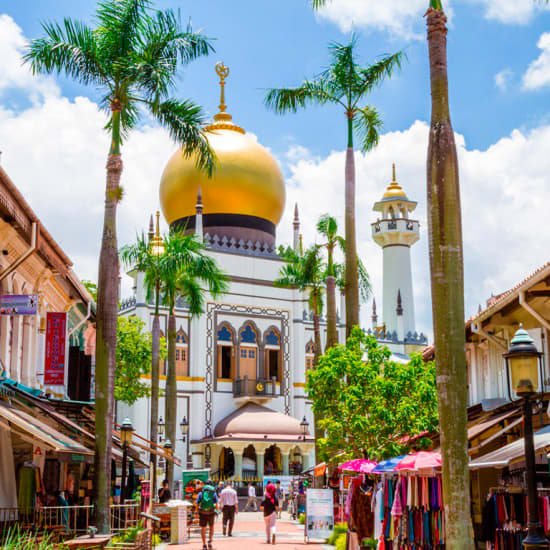
Spend the afternoon wandering Haji Lane, where independent clothing shops, small design stores and colourful murals fill a narrow shophouse lane. It is best explored slowly rather than as a checklist; many shops open around 11:00am or later, and the lane becomes livelier in the late afternoon. After browsing, walk a few minutes to Sultan Mosque, whose huge golden dome is the centrepiece of Kampong Glam. Visitors may enter outside prayer periods, usually with modest clothing and shoes removed; allow about 45 minutes and check the posted visiting hours on arrival. As evening arrives, finish at Gelam Gallery, an outdoor street-art trail along the shophouses of Muscat Street and nearby lanes. The murals are free to view and particularly atmospheric as the lights come on. For dinner, stay in Kampong Glam and choose a casual Malay or Middle Eastern restaurant along Arab Street or North Bridge Road, rather than rushing back across the city.
Singapore gardens and skyline
- Gardens by the Bay — Marina Bay, morning, ~2 hours; explore the waterfront gardens.
- Cloud Forest — Gardens by the Bay, late morning, ~1.5 hours; cool off beside the indoor waterfall.
- Flower Dome — Gardens by the Bay, midday, ~1.5 hours; visit the changing botanical displays.
- Satay by the Bay — Gardens by the Bay, dinner, ~1 hour; eat inexpensive satay and hawker dishes, roughly S$10–25 per person.
- OCBC Skyway — Supertree Grove, evening, ~45 minutes; see Marina Bay illuminated from above.
Morning
Start around 8:30am at Gardens by the Bay, entering through the Bayfront Plaza side if you are coming from Bayfront MRT. The outdoor gardens are free and pleasant before the humidity peaks, so spend about two hours wandering the waterfront paths, Dragonfly Lake and the Supertree Grove rather than rushing straight indoors. The gardens open from 5:00am, and the conservatories usually open around 9:00am; allow roughly S$35–45 per adult for the combined Cloud Forest and Flower Dome tickets, depending on the 2027 rate. Bring water and use the shaded paths—Singapore’s heat can be surprisingly draining even in the morning.
Move next into Cloud Forest, where the huge indoor waterfall and misty mountain landscape make this the best place to cool down. Allow about 90 minutes, then continue directly to the Flower Dome for another 90 minutes of themed gardens and seasonal displays. Both conservatories are air-conditioned, but the transition outside can feel warm, so keep a light layer handy. You can buy drinks and snacks inside, though prices are noticeably higher than at hawker centres.
Afternoon and Evening
Keep the afternoon unhurried: find a shaded bench around Marina Bay or return briefly to your accommodation before coming back for dinner at Satay by the Bay, usually open into the evening. It is one of the more affordable ways to eat in this part of Singapore—expect about S$10–25 per person for satay, grilled seafood, noodles or drinks. Go around 5:30–6:00pm for easier seating and order from several stalls to share. After dinner, head back to the Supertree Grove for the OCBC Skyway. The elevated walkway takes around 45 minutes and offers a much better view once the skyline lights come on; tickets are commonly around S$14–18 per adult, with the last admission often around 8:00–8:30pm, but check the official schedule before setting out. From Gardens by the Bay, Bayfront MRT is a 10–15-minute walk, while a Grab is simplest if you are tired.
Relaxed Singapore day
- Singapore Botanic Gardens — Tanglin, morning, ~2.5 hours; enjoy Singapore’s lush UNESCO-listed garden.
- National Orchid Garden — Botanic Gardens, late morning, ~1.5 hours; see the gardens’ signature orchid collection.
- Tiong Bahru Market — Tiong Bahru, lunch, ~1.5 hours; eat local hawker food, roughly S$8–20 per person.
- Tiong Bahru neighbourhood — Tiong Bahru, afternoon, ~1.5 hours; explore Art Deco blocks and independent cafés.
- BooksActually — Tiong Bahru, late afternoon, ~45 minutes; browse a beloved independent Singapore bookstore.
Morning
Start around 8:00am at the Singapore Botanic Gardens, entering from the Tanglin Gate or Nassim Gate. The gardens open from 5:00am and general admission is free, making this one of Singapore’s best-value mornings. Allow about 2½ hours to wander the lakes, rainforest paths and quieter corners at an easy pace; bring water, sunscreen and insect repellent, as the humidity builds quickly. From central Singapore, take the MRT to Botanic Gardens MRT or use a short Grab ride—usually about S$8–15 depending on traffic.
Late in the morning, continue to the National Orchid Garden, inside the Botanic Gardens. It usually opens from around 8:30am and costs approximately S$3–5 for international adult visitors, with updated rates worth checking before your trip. Give yourselves about 1½ hours for the themed orchid displays, cool-house collections and the famous VIP Orchid Garden. The walk is uphill in places, so comfortable shoes are worthwhile.
Lunch and Afternoon
Take a Grab or bus to Tiong Bahru Market, roughly 15–25 minutes from the gardens depending on traffic. Spend about 1½ hours here over lunch, looking for local favourites such as fishball noodles, roast meats, chwee kueh and fresh juices; allow around S$8–20 per person. Hawker stalls generally become busiest from noon, so arrive slightly before 12:00pm if you want an easier search for seats. Remember the local custom of “chope-ing” a table with a packet of tissues.
After lunch, explore the surrounding Tiong Bahru neighbourhood on foot for about 1½ hours. The Art Deco apartment blocks around Tiong Bahru Road, Yong Siak Street and Eng Hoon Street make for a pleasant, very walkable wander, with shaded corridors, murals and small cafés. Finish at BooksActually, the neighbourhood’s much-loved independent bookstore, allowing around 45 minutes to browse Singaporean fiction, design books and unusual gifts. It is generally open from late morning into the evening, though check its current hours before setting out.
Evening
Keep the evening unplanned: settle into a café around Tiong Bahru for iced kopi or tea, then return to your accommodation by MRT from Tiong Bahru MRT or by Grab. This is a good night for a simple hawker dinner rather than another major attraction—the gardens and neighbourhood walking make a full but comfortably relaxed final Singapore day.
Final evening in Singapore
- Jewel Changi Airport — Changi, morning, ~2 hours; visit the Rain Vortex and indoor forest without needing a flight yet.
- East Coast Park — East Coast, afternoon, ~2 hours; cycle or stroll beside the coast.
- East Coast Lagoon Food Village — East Coast, late afternoon, ~1.5 hours; enjoy affordable seafood and hawker dishes, roughly S$10–25 per person.
- Marina Bay Sands SkyPark Observation Deck — Marina Bay, evening, ~1.5 hours; finish with a major skyline viewpoint.
- Spectra light and water show — Marina Bay, evening, ~30 minutes; watch the free waterfront finale.
Morning: Jewel Changi Airport
Use your final full day for a relaxed east-to-city route, starting at Jewel Changi Airport around 9:00am. Take the MRT to Changi Airport—the station is connected to Terminals 2 and 3—or use a taxi if you are carrying luggage. You can enter Jewel without a flight, and two hours is enough to see the Rain Vortex, wander the Shiseido Forest Valley, and browse the shops and cafés. The complex generally opens from 10:00am, although the Rain Vortex typically runs from late morning; check the current display schedule before leaving. Store larger bags at the airport baggage facilities if needed, and have breakfast here before continuing.
Afternoon: East Coast Park
From Changi Airport, take a taxi or Grab to East Coast Park—around 15–25 minutes, depending on traffic—or use the MRT and connect by bus, although the taxi is much easier for two people. Spend roughly two hours walking or hiring bicycles along the coastal path, particularly around Area D and Area E, where you get open sea views and a pleasant local weekend atmosphere. Bring water, sunscreen and a hat: the park is exposed, and the humidity can feel strong even when there is a breeze. Bicycle hire is commonly around S$10–20 for a few hours, depending on the operator.
Late afternoon and evening: food and Marina Bay views
Continue to East Coast Lagoon Food Village for an early dinner around 4:30–5:00pm, before the busiest evening period. This is an easy place to try several Singapore favourites without committing to a restaurant: look for satay, barbecued seafood, chicken wings and noodle dishes, with approximately S$10–25 per person for a generous meal. Allow about 90 minutes, and carry cash or a small card-enabled payment option because individual stalls vary. From the food centre, a Grab to Marina Bay Sands usually takes 15–25 minutes; public transport is cheaper but involves a longer bus-and-MRT connection.
Book a timed visit to the Marina Bay Sands SkyPark Observation Deck for around 7:00pm, allowing 1½ hours for the lift, viewing platforms and skyline photographs. Tickets are often around S$35–40 per adult, but confirm the 2027 price and reserve ahead for sunset or evening slots. Afterwards, walk down to the waterfront promenade for Spectra, the free light-and-water show. Shows are commonly scheduled at 8:00pm and 9:00pm, with an additional later performance on some nights; check the current timetable and arrive 10–15 minutes early for a clear view. It is a fitting final evening: the show lasts about 15 minutes, and you can then return to your accommodation by MRT or Grab.
Return journey to Adelaide
- Singapore breakfast near the hotel — Central Singapore, morning, ~1 hour; have kaya toast or another easy local breakfast.
- Flight from Singapore to Adelaide — Changi Airport → Adelaide, depart with at least 3 hours for airport check-in; allow roughly 7–10 hours including any connection.
Morning: Easy Singapore breakfast
Have your final breakfast near the hotel rather than making a special cross-city trip. Look for a nearby Ya Kun Kaya Toast, Toast Box, or a traditional coffee shop in your neighbourhood and order kaya toast with soft-boiled eggs and kopi or teh. Allow about an hour, and expect roughly S$5–10 per person for a simple breakfast. If you have luggage, ask the hotel to hold it after checkout; this is much easier than carrying bags around Singapore.
Departure: Changi Airport to Adelaide
Leave central Singapore for Changi Airport about three hours before your flight, adding extra time if you need to check bags or are travelling on separate tickets. The East West Line is the cheapest option, taking around 45–60 minutes with a change at Tanah Merah; a taxi or Grab usually takes 25–35 minutes outside peak traffic and costs approximately S$25–40, before any airport surcharge. Check which terminal your airline uses, as the terminals are connected by the free Skytrain, and complete any required departure procedures before browsing the airport shops or getting a final meal. The journey to Adelaide generally takes around 7–10 hours including a connection, depending on the flight routing.