Three-Week Singapore City Itinerary
Central Singapore arrival
- Lau Pa Sat — Downtown Core; sample Singapore hawker food after arrival, late morning, ~1 hour, S$8–20 per person.
- National Gallery Singapore — Civic District; explore major Southeast Asian art collections, early afternoon, ~2 hours.
- Raffles Hotel Singapore — Bras Basah; see the historic courtyard and enjoy a Singapore Sling or afternoon drink, mid-afternoon, ~1 hour, S$25–40.
- Merlion Park — Marina Bay; take classic waterfront photographs, late afternoon, ~45 minutes.
- Makansutra Gluttons Bay — Esplanade waterfront; casual local dinner with bay views, evening, ~1.5 hours, S$15–30.
Late Morning — First Taste of Singapore
After checking in and dropping your bags, head to Lau Pa Sat around 11:00am. This grand Victorian market hall is especially convenient on arrival day: it is central, covered, open 24 hours, and easy to reach by walking or a short MRT ride from most Downtown Core hotels. Give yourself about an hour to browse the stalls rather than ordering immediately—good first choices include chicken rice, laksa, satay, or a plate of char kway teow. Expect roughly S$8–20 per person, and note that the famous Satay Street outside is liveliest from late afternoon into the evening, so today’s daytime visit is best for a relaxed introduction.
Early Afternoon — Southeast Asian Art
From Lau Pa Sat, walk about 15–20 minutes toward National Gallery Singapore, passing the civic buildings around Padang on the way. Allow two hours inside; the gallery is housed in the former Supreme Court and City Hall, and the building itself is nearly as memorable as its Southeast Asian collection. It generally opens from around 10:00am to 7:00pm, with later closing on some evenings; admission varies by exhibition, so budget approximately S$20–30 for a non-resident adult if you want full access. Wear comfortable shoes—the galleries are spread across several floors—and take a short break in the rooftop area if the afternoon heat becomes tiring.
Mid-Afternoon to Evening — Heritage, Waterfront, and Dinner
Continue on foot for about 15 minutes to Raffles Hotel Singapore. You can enter the public areas and historic courtyard without booking a room; for a drink at Long Bar, reserve if possible, otherwise enjoy the atmosphere with a Singapore Sling or another drink for roughly S$25–40. Keep this to an hour, then take a taxi or walk 20–25 minutes toward Merlion Park for late-afternoon photographs, when the light is softer and the skyline begins to glow. Finish at Makansutra Gluttons Bay, beside Esplanade, about a 10-minute walk from the Merlion. Choose a few dishes to share—barbecued seafood, satay, oyster omelette, or fried noodles—and expect S$15–30 per person. Seating is casual and mostly outdoors, so bring water and a small umbrella; the bay view is particularly good after sunset.
Marina Bay exploration
- Gardens by the Bay — Marina Bay; visit the Flower Dome and Cloud Forest, morning, ~3 hours, S$35–45.
- ArtScience Museum — Marina Bay; see immersive exhibitions beside Marina Bay Sands, early afternoon, ~1.5 hours, S$20–35.
- Marina Bay Sands SkyPark Observation Deck — Marina Bay; enjoy panoramic city views, late afternoon, ~1 hour, S$30–40.
- Satay by the Bay — Gardens by the Bay; eat satay and other hawker dishes outdoors, evening, ~1.5 hours, S$15–30.
- Spectra — Marina Bay; watch the free outdoor light-and-water show, evening, ~20 minutes.
Morning — Gardens by the Bay
Leave the Downtown Core around 8:00am and take the Downtown Line to Bayfront; use Exit B for the pedestrian link toward Gardens by the Bay. Allow roughly 10–15 minutes on the MRT, then another 10 minutes of walking. Start with the Flower Dome and Cloud Forest before the heat builds—together, they usually take about three hours. The conservatories generally open at 9:00am, and a combined ticket is about S$35–45; check the timed-entry details when booking, as last admission and occasional maintenance closures vary.
Early Afternoon — ArtScience Museum
Walk back through Marina Bay Sands to the ArtScience Museum, beside the waterfront. The route takes around 15–20 minutes, or you can use the air-conditioned mall if the weather turns wet. Spend about 1½ hours on the immersive exhibitions; admission commonly falls between S$20–35 depending on the exhibition combination. Have a light coffee or snack in the mall rather than making this a long lunch—the best outdoor food stop comes later.
Late Afternoon and Evening — Bay views, satay, and Spectra
After the museum, wander along the promenade and return to Marina Bay Sands for the SkyPark Observation Deck. Book a timed slot around 4:30–5:00pm for softer light and views across the bay, Gardens by the Bay, and the southern islands; allow an hour and expect to pay about S$30–40. Then walk across to Satay by the Bay, roughly 15–20 minutes away, for an unfussy dinner of satay, grilled seafood, noodles, and cold drinks. Most stalls operate from late morning into the evening, though individual hours vary; budget S$15–30 and bring cash or a card suited to the stall’s payment system. Finish back at Marina Bay Sands for Spectra, the free light-and-water show on the Event Plaza. Check the day’s performance times—usually two or three evening shows—and arrive 10–15 minutes early for a waterfront spot.
Civic District and Fort Canning
- National Museum of Singapore — Bras Basah; learn the country’s history through engaging galleries, morning, ~2 hours.
- Fort Canning Park — River Valley; walk the historic hill and underground passage, late morning, ~1.5 hours.
- Peranakan Museum — Civic District; explore elegant Peranakan culture and design, early afternoon, ~1.5 hours.
- CHIJMES — Bras Basah; see the restored convent complex and browse its restaurants, late afternoon, ~1 hour.
- Candlenut — Dempsey Hill; enjoy refined Peranakan cuisine, dinner, ~2 hours, S$80–140 per person.
Morning — National Museum of Singapore
From Marina Bay, leave around 8:00am and take the MRT from Bayfront to City Hall; it is roughly 10–15 minutes, followed by a 10-minute walk along Stamford Road. Start at the National Museum of Singapore, which usually opens at 10:00am (check the morning opening time before setting out). Allow about two hours for the Singapore History Gallery and Life in Singapore galleries—an easy, engaging introduction to the city’s colonial, wartime, and post-independence story. General admission is typically around S$15 for international adults, with special exhibitions charged separately.
Late Morning and Lunch — Fort Canning Park
Walk uphill toward Fort Canning Park, about 15 minutes from the museum, passing the leafy edges of Dhoby Ghaut and Fort Canning. Explore the old hilltop paths, Fort Canning Centre, and the atmospheric Fort Canning Underground Fort Gate; the park is free and open throughout the day, though the underground passage has limited access and can be closed for maintenance. Give yourself around 90 minutes, and bring water—the slopes and steps feel deceptively tiring in Singapore’s humidity. For lunch, walk down toward Riverside Point or Hill Street rather than eating inside the park, where choices are limited.
Afternoon — Peranakan Museum and CHIJMES
After lunch, continue on foot to the Peranakan Museum, about 15 minutes away along Hill Street and Armenian Street. Its galleries of beadwork, wedding clothing, furniture, and domestic design are best enjoyed slowly; allow 90 minutes. Admission is generally about S$12 for international visitors, and the museum is usually open from 10:00am, with later closing on some days. In the late afternoon, stroll to CHIJMES, a restored former convent complex around 10 minutes away. Wander through the courtyards and neo-Gothic chapel exterior, then settle at one of the restaurants or bars for a drink; it is a pleasant pause before dinner, especially as the buildings light up after sunset.
Evening — Candlenut
For dinner at Candlenut in Dempsey Hill, allow 15–20 minutes by taxi or ride-hailing car from CHIJMES; public transport takes longer and involves a walk. This is a destination dinner rather than a casual stop, with refined Peranakan dishes and a tasting-menu style of dining. Budget roughly S$80–140 per person before drinks, and reserve ahead—the restaurant is popular and dinner seatings can fill quickly. Dress smart-casual, arrive on time for the full menu, and expect around two hours for the meal.
Chinatown heritage
- Sri Mariamman Temple — Chinatown; admire Singapore’s oldest Hindu temple, morning, ~45 minutes.
- Buddha Tooth Relic Temple & Museum — Chinatown; visit the richly decorated Buddhist temple, morning, ~1 hour.
- Chinatown Heritage Centre — Chinatown; understand early immigrant life, late morning, ~1.5 hours.
- Maxwell Food Centre — Chinatown; try chicken rice, porridge, and local snacks, lunch, ~1 hour, S$8–20.
- Ann Siang Hill and Club Street — Chinatown; browse shophouses, boutiques, and bars, afternoon, ~1.5 hours.
- Chinatown Complex Food Centre — Chinatown; finish with inexpensive local dishes, evening, ~1 hour, S$8–20.
Morning — Temples and Chinatown’s old streets
Start around 8:30am at Sri Mariamman Temple on South Bridge Road, when the light is gentle and the temple is quieter. Singapore’s oldest Hindu temple is still an active place of worship, so dress with shoulders and knees covered, remove your shoes, and keep photography discreet around devotees. Allow about 45 minutes, then walk two minutes along South Bridge Road to Buddha Tooth Relic Temple & Museum. The richly decorated main hall is free to enter and usually opens from around 7:00am; the museum galleries generally open later, so check the day’s access on arrival. Plan roughly an hour, and don’t miss the upper floors if they are open.
A short walk brings you to the Chinatown Heritage Centre, where about 1½ hours gives you a useful picture of cramped shophouse living and the lives of early immigrants. It is best visited before lunch, while you still have the energy for the detailed exhibits; admission is typically around S$20–25 for adults, with hours commonly beginning around 10:00am. Keep the route on foot rather than zigzagging—this stretch of Chinatown is compact, and the shaded five-foot ways are part of the experience.
Lunch and Afternoon Wandering
For lunch, walk a few minutes to Maxwell Food Centre and join the local crowd for chicken rice, porridge, fresh juices, or small plates to share. Budget S$8–20, depending on how much you sample. Stall hours vary, and some famous vendors close on particular weekdays, so treat the centre as a collection of choices rather than arriving with only one stall in mind. After eating, wander uphill through Ann Siang Hill and Club Street, where restored shophouses give way to small boutiques, galleries, cafés, and cocktail bars. The streets are quietest in the afternoon; allow 1½ hours and take your time around Ann Siang Road, Club Street, and the lanes connecting them.
Evening — A casual hawker finish
Return downhill toward Chinatown Complex Food Centre for an inexpensive early dinner or supper. It is a good place to try a second round of Singaporean food—look for noodles, roast meats, dumplings, or local desserts—and S$8–20 is ample for a satisfying meal. The complex can feel busy and slightly chaotic, so walk through once before choosing a stall, carry cash for smaller vendors, and clear your table promptly after eating. From there, Chinatown MRT is only a few minutes away, while Maxwell Road and South Bridge Road are convenient for a short post-dinner stroll.
Tanjong Pagar and Keppel Bay
- Tanjong Pagar Centre — Tanjong Pagar; begin with coffee and skyline views around the business district, morning, ~1 hour, S$8–18.
- Singapore City Gallery — Tanjong Pagar; see an excellent model of Singapore’s urban planning, late morning, ~1.5 hours.
- Duxton Plain Park — Tanjong Pagar; walk through preserved shophouses and greenery, midday, ~45 minutes.
- Keppel Bay — HarbourFront; stroll the marina and waterfront promenade, afternoon, ~1.5 hours.
- Privé Keppel Bay — Keppel Bay; enjoy a relaxed waterfront meal, evening, ~2 hours, S$35–70 per person.
Morning — Tanjong Pagar’s modern skyline
Start at Tanjong Pagar Centre around 8:30am, when the business district is coming to life but the pavements are not yet crowded. Pick up coffee and breakfast from one of the cafés in the complex, then take a little time to enjoy the elevated views around the towers—this is a good contrast to yesterday’s historic Chinatown streets. Allow about an hour; coffee and a light breakfast will usually cost S$8–18. From here, it is a short walk along Maxwell Road to Singapore City Gallery, which generally opens at 9:00am and is one of the best places to understand how Singapore has been planned and reshaped. The detailed city models and interactive exhibits take roughly 1½ hours; admission is usually free, though check the current opening schedule before setting out.
Midday — Shophouses and a slower walk
After the gallery, walk west toward Duxton Plain Park, using Neil Road and the lanes around Duxton Hill rather than the main roads. Give yourself about 45 minutes to wander among the preserved shophouses and pocket greenery; the area is especially pleasant before the afternoon heat builds. This is a good point to pause for a drink or a light snack in the surrounding cafés, rather than committing to a large lunch—you have a more relaxed waterfront meal ahead. Bring water, as the park has limited shade and Singapore’s humidity can make even a short walk feel surprisingly warm.
Afternoon and Evening — Keppel Bay waterfront
Continue toward Keppel Bay on foot, allowing roughly 20–30 minutes, or take a short bus or taxi if the weather is hot. The route passes through the changing edges of the old port district, and the contrast between former industrial land and the polished marina is part of the appeal. Spend about 1½ hours on the waterfront promenade, taking in the boats, apartment architecture, and open views across the bay. Arrive at Privé Keppel Bay for an unhurried early dinner or evening meal; a main meal with drinks generally runs S$35–70 per person. Reserve ahead for a preferred outdoor table, particularly on Friday or Saturday evenings, and keep some time after dinner for a final promenade walk as the marina lights come on.
Little India culture
- Tekka Centre — Little India; eat South Indian or North Indian hawker food and browse the market, morning, ~1.5 hours, S$8–20.
- Sri Veeramakaliamman Temple — Little India; see an ornate Hindu temple on Serangoon Road, late morning, ~45 minutes.
- Indian Heritage Centre — Little India; explore the Indian diaspora’s history, midday, ~1.5 hours.
- House of Tan Teng Niah — Little India; photograph one of the district’s most colorful historic houses, afternoon, ~30 minutes.
- Mustafa Centre — Little India; browse its famously extensive shopping complex, late afternoon, ~1.5 hours.
- Banana Leaf Apolo — Little India; have a traditional banana-leaf curry dinner, evening, ~1.5 hours, S$20–40 per person.
Morning
Leave Tanjong Pagar around 8:00am for Little India and aim to reach Tekka Centre shortly after opening. The market is best in the morning, before the food stalls and produce counters become crowded; allow about 1½ hours to eat and browse. Look for South Indian staples such as dosa, vadai, and thali, or North Indian naan and biryani—budget roughly S$8–20. Keep a little cash handy, although many stalls now accept cards or QR payment.
From Tekka Centre, walk five minutes along Serangoon Road to Sri Veeramakaliamman Temple. Spend around 45 minutes admiring the vividly painted gopuram and interior shrines. It is an active place of worship, so cover your shoulders and knees, remove your shoes where requested, and avoid photographing worshippers during ceremonies. Continue south toward the Indian Heritage Centre, where a well-designed collection traces the history of Indian communities in Singapore; allow about 1½ hours, with admission generally around S$8 for adults. Check the day’s opening hours before setting out, as museum hours can vary.
Afternoon and Evening
After the museum, wander through the quieter side streets around Dunlop Street and Kerbau Road before reaching House of Tan Teng Niah, a five- to ten-minute walk away. The brightly painted former Chinese villa is mainly a quick photo stop—allow 30 minutes—and is best viewed from the outside. From there, walk or take a short bus ride toward Mustafa Centre; give yourself around 1½ hours to explore its enormous, open-late shopping complex, which sells everything from Indian groceries and spices to electronics, clothing, and travel essentials. It can feel overwhelming, so choose one or two floors rather than trying to cover the entire building. Finish at Banana Leaf Apolo on Little India’s Race Course Road for dinner, roughly a 10-minute walk from Mustafa Centre. Order a banana-leaf curry with rice, vegetables, and perhaps fish head curry or tandoori dishes; allow S$20–40 per person and expect a lively, informal meal.
Kampong Glam and Arab Street
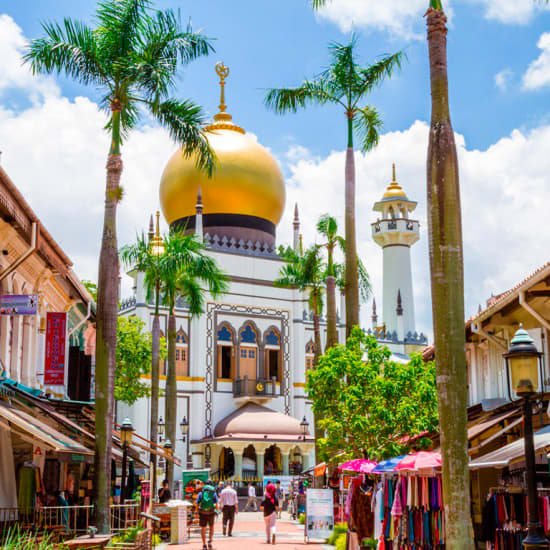
- Sultan Mosque — Kampong Glam; admire the golden domes and historic interior, morning, ~45 minutes.
- Malay Heritage Centre — Kampong Glam; learn about Malay royalty and culture, late morning, ~1.5 hours.
- Haji Lane — Kampong Glam; browse independent shops and vivid street art, midday, ~1 hour.
- Arab Street — Kampong Glam; shop for textiles, perfumes, and handicrafts, afternoon, ~1 hour.
- The Coconut Club — Beach Road; try coconut-based Singaporean specialties, lunch, ~1.5 hours, S$25–50 per person.
- Gelam Gallery — Kampong Glam; view murals and public art around the neighborhood, late afternoon, ~45 minutes.
Morning — Sultan Mosque and the Malay Heritage Centre
Leave Little India around 8:30am and take the Downtown Line one stop to Rochor, then walk about 10 minutes via North Bridge Road and Bussorah Street into Kampong Glam. Begin at Sultan Mosque, ideally around 9:00am, before the surrounding lanes get busy. The golden domes are best photographed from Bussorah Street; visitors may enter outside prayer times, but dress modestly and follow the mosque’s instructions. Allow about 45 minutes. Then walk a few minutes to the Malay Heritage Centre on Sultan Gate for an hour to 90 minutes of exhibits on Malay royalty, migration, and local culture. Check its opening days and ticket prices before going, as museum hours can change.
Midday — Haji Lane, lunch, and Arab Street
From the heritage centre, wander through Haji Lane, where the narrow shopfronts, murals, boutiques, and cafés make a good contrast with the mosque precinct. It is usually livelier from late morning onward, though some independent shops open closer to 11:00am; allow roughly an hour and don’t rush the side lanes around Bali Lane. For lunch, walk about 10 minutes toward Beach Road to The Coconut Club. Order one of its coconut-based Singaporean dishes—nasi lemak is the dependable choice—and leave around 1½ hours; budget approximately S$25–50 per person. A queue is possible at peak lunch, so arriving slightly before noon helps.
Afternoon and late afternoon — Arab Street and Gelam Gallery
Return toward Arab Street after lunch, taking your time among the textile shops, perfume counters, carpet stores, and handicraft stalls. Prices vary widely, so compare a few shops before buying, particularly for fabrics or fragrance oils; an hour is enough for a relaxed browse. Finish at Gelam Gallery, a collection of large murals and public artworks spread around the walls and lanes of Kampong Glam. It is free and takes about 45 minutes, with the softer late-afternoon light making the murals easier to photograph. From there, you can stay for dinner around Bussorah Street or North Bridge Road; the neighborhood becomes especially atmospheric after sunset, when the mosque is illuminated and the café terraces fill.
Bugis and Bras Basah
- Bugis Street Market — Bugis; shop for inexpensive souvenirs, clothes, and snacks, morning, ~1.5 hours.
- National Design Centre — Bras Basah; see Singaporean design exhibitions and studios, late morning, ~1 hour.
- Singapore Art Museum — Bras Basah; visit contemporary art exhibitions, early afternoon, ~1.5 hours.
- CHIJMES — Bras Basah; relax among historic architecture and shaded courtyards, late afternoon, ~1 hour.
- Albert Centre Market & Food Centre — Bugis; eat local noodles, rice dishes, or desserts, evening, ~1 hour, S$8–20.
Morning
Walk south from Kampong Glam through North Bridge Road to Bugis Street Market—about 10–15 minutes, and an easy start after yesterday’s neighborhood wander. Arrive around 9:30am, before the narrow lanes become crowded, and allow roughly 1½ hours for inexpensive clothes, phone accessories, souvenirs, and packaged snacks. Bargaining is generally limited, but comparing a few stalls is worthwhile; keep small notes handy and watch your belongings in the busiest aisles.
Continue on foot toward National Design Centre in Bras Basah, around 10 minutes via Middle Road. The building’s galleries and design showcases usually open from about 10:00am, with free public displays alongside occasional paid exhibitions. Spend an hour looking through Singapore-focused furniture, graphics, fashion, and product design, then walk a few minutes to the Singapore Art Museum. Check the current exhibition and opening schedule before setting out, as galleries and programmes can change; allow about 1½ hours for contemporary art. Nearby cafés on Waterloo Street are convenient for a drink, though it is best to keep lunch flexible.
Afternoon and Evening
From the museum, take a slow walk to CHIJMES, roughly 5–10 minutes through the Bras Basah civic quarter. The former convent’s white chapel, covered walkways, and leafy courtyards are ideal for an unhurried late afternoon break; allow about an hour, with drinks or a light bite from one of the restaurants there. The complex is freely accessible, although individual venues keep their own hours and prices, and the atmosphere becomes livelier toward dinner.
For a genuinely local finish, walk back toward Albert Centre Market & Food Centre near Queen Street and Bugis Street, arriving around 6:00–7:00pm. Most stalls are inexpensive—roughly S$8–20 for a meal—and you can choose between noodles, rice dishes, chicken rice, Malay favourites, and traditional desserts. Stalls commonly close once their food sells out, so do not leave this stop too late; after dinner, it is an easy 10-minute walk back through Bugis or to Bugis MRT.
Orchard Road city life
- Singapore Botanic Gardens — Tanglin; walk through lush tropical gardens, morning, ~2 hours.
- National Orchid Garden — Tanglin; see Singapore’s signature orchid collection, late morning, ~1.5 hours, S$3–5.
- ION Orchard — Orchard; explore Singapore’s flagship shopping district, afternoon, ~2 hours.
- Design Orchard — Orchard; browse locally designed fashion, crafts, and gifts, late afternoon, ~1 hour.
- Newton Food Centre — Newton; sample satay, seafood, and hawker classics, evening, ~1.5 hours, S$15–30.
Morning — Singapore Botanic Gardens
Leave Bugis around 8:00am and take the MRT to Botanic Gardens; the ride is usually 15–20 minutes, followed by a short walk to the Tanglin Gate area. Start with a relaxed two-hour wander through the Singapore Botanic Gardens, following the paths around the Swan Lake and Ginger Garden before the midday heat arrives. The gardens open from 5:00am and general admission is free, so there is no need to rush; bring water, sunscreen, and an umbrella for sudden showers. From the Tanglin side, walk 10–15 minutes through the gardens to the National Orchid Garden, which generally opens at 8:30am.
Late Morning — National Orchid Garden
Spend about 1½ hours in the National Orchid Garden, where the walkways are shaded and the displays range from delicate hybrids to the celebrated VIP Orchid Garden. Admission is typically around S$3–5 for adults, with the exact rate depending on current visitor categories; allow extra time for photographs in the Burkill Hall area. Afterwards, exit toward Cluny Road and take the MRT from Botanic Gardens to Orchard, or use a short taxi if you are ready for lunch. The MRT journey is only a few minutes, but allow roughly 20 minutes door to door.
Afternoon — ION Orchard and Design Orchard
Spend the afternoon at ION Orchard, starting with lunch or coffee inside the mall before exploring its fashion floors, art installations, and excellent city views from the upper levels. It is air-conditioned and useful during the hottest part of the day; shops generally open around 10:00am and stay open into the evening. When you want a change of pace, walk along Orchard Road toward Design Orchard—about 10 minutes, mostly along covered pavements. This compact creative hub is a good place to browse Singapore-designed clothing, ceramics, stationery, and gifts rather than international chain stores; allow about an hour, and check individual studio or retail hours as they vary.
Evening — Newton Food Centre
As the light softens, take the MRT from Orchard to Newton—just a few minutes—or walk roughly 20 minutes if you would like to see more of the shopping belt. Finish at Newton Food Centre, where an hour and a half is enough to share several dishes: look for satay, grilled seafood, oyster omelette, and local noodle dishes, with a realistic budget of S$15–30 per person depending on how generously you order. Most stalls trade from late morning into the night, though opening days and hours differ, so choose from the busiest counters and pay attention to stall-specific pricing before ordering. Bring cash as a backup, and return to Newton MRT for an easy ride back into town.
River Valley and Robertson Quay
- Great World — River Valley; start with coffee and food stalls in the modern lifestyle mall, morning, ~1 hour, S$8–18.
- Zouk Singapore — River Valley; see one of Singapore’s best-known nightlife venues in daylight, late morning, ~45 minutes.
- Robertson Quay — Singapore River; stroll the riverside promenade, midday, ~1 hour.
- Red House Seafood Restaurant — Robertson Quay; enjoy a relaxed seafood lunch, early afternoon, ~1.5 hours, S$40–80 per person.
- Kim Yam Road shophouses — River Valley; explore quieter heritage streets and independent businesses, afternoon, ~1 hour.
- The Warehouse Hotel — Robertson Quay; finish with a riverside cocktail or dinner, evening, ~1.5 hours, S$35–70 per person.
Morning
Walk from Orchard to Great World in about 20–30 minutes via River Valley Road, or take a short bus ride if the humidity is already building; a taxi or Grab usually takes 5–12 minutes. Start at Great World around 9:00am for coffee and breakfast from the mall’s food stalls and cafés. It is a useful local-style stop rather than a sightseeing landmark, with plenty of air-conditioning and easy seating; allow about an hour and expect to spend S$8–18. From there, it is a short walk to Zouk Singapore on Mohamed Sultan Road. The club is quiet in daylight, but its entrance and riverside setting make a quick look worthwhile—keep this to roughly 45 minutes, as the venue’s main atmosphere comes after dark.
Midday and Lunch
Continue on foot toward Robertson Quay, following the Singapore River for around 10–15 minutes. The riverside promenade is best enjoyed slowly: pause beneath the trees, watch the boats, and explore the converted warehouses and low-rise apartments lining the water. After about an hour, settle in for an early lunch at Red House Seafood Restaurant, where classic Singaporean seafood dishes are suited to sharing. Chili crab, black-pepper crab, prawns, and seasonal fish can push the bill up quickly, so allow around S$40–80 per person and ask about market prices before ordering.
Afternoon and Evening
After lunch, wander inland to the Kim Yam Road shophouses, a quieter pocket of River Valley with older façades, small businesses, and a more residential feel than the main quay. Give yourself an hour to explore without a strict route; the best parts are the side lanes and understated details rather than a single attraction. Return toward the river in the early evening and finish at The Warehouse Hotel, housed in a historic former godown on Havelock Road. Have a cocktail or dinner by the water for about 1½ hours, budgeting S$35–70 per person. It is a polished final stop, so smart-casual clothing is preferable, and reservations are sensible for dinner or weekend evenings.
Clarke Quay and Singapore River
- Asian Civilisations Museum — Empress Place; explore Asian art and maritime connections, morning, ~2 hours.
- Cavenagh Bridge — Singapore River; cross Singapore’s oldest surviving bridge, late morning, ~30 minutes.
- Boat Quay — Singapore River; walk the historic riverside restaurant strip, midday, ~1 hour.
- Jumbo Seafood Riverside Point — Clarke Quay; try Singapore-style chili crab, lunch, ~2 hours, S$60–120 per person.
- Fort Canning Arts Centre — Fort Canning; see exhibitions or performances in a historic setting, afternoon, ~1.5 hours.
- Clarke Quay — Singapore River; enjoy the evening atmosphere and waterfront lights, evening, ~1.5 hours.
Morning — Asian art by the river
Walk from River Valley along the Singapore River toward Asian Civilisations Museum at Empress Place—about 15–25 minutes, with the water and low-rise riverfront buildings making it a pleasant start. Aim to arrive near opening, usually 10:00am; admission is generally around S$20–25 for international visitors, with concessions and occasional special exhibitions priced separately. Give yourself about two hours for the galleries, especially the collections on Southeast Asian ceramics, trade routes, and maritime connections. It is a good museum for a humid morning because the displays are thoughtfully arranged and fully air-conditioned.
Afterward, stroll across Cavenagh Bridge, Singapore’s oldest surviving bridge, and take your time with the views toward Boat Quay. The bridge itself takes only about 30 minutes including photographs; from there, the riverside walk to Boat Quay is immediate. Spend roughly an hour wandering beneath the restored shophouses and along the historic restaurant strip, but treat this mainly as a scenic walk rather than a place to browse every menu—the riverfront can be touristy and prices vary widely.
Lunch — Chili crab on the Singapore River
Continue along the river to Jumbo Seafood Riverside Point at Clarke Quay for lunch, allowing around two hours. Chili crab is the obvious order, ideally with fried or steamed buns for soaking up the sauce; black pepper crab, cereal prawns, and seasonal vegetables are good additions if you are sharing. Budget approximately S$60–120 per person depending on the crab size, seafood selection, drinks, and service charge. Make a reservation if possible, particularly for a weekend-style lunch, and check the restaurant’s current hours before setting out.
Afternoon and evening — Fort Canning, then the lights of Clarke Quay
From Clarke Quay, walk uphill toward Fort Canning Arts Centre in about 10–15 minutes, allowing for the noticeable slope and heat. Set aside about 1½ hours for the current exhibition or performance; programming changes, and some events require advance tickets, so check the venue calendar rather than assuming there will be a gallery open. The former military site gives the afternoon a quieter, more historic feel after the busy riverfront.
Return downhill to Clarke Quay for the evening, when the waterfront lights come on and the bars and restaurants begin filling. Allow about 1½ hours for a relaxed riverside drink or dessert and a final walk along the promenade. It is livelier after dark than during the day, but you can avoid the loudest club atmosphere by staying close to the river and departing before the late-night crowds.
Tiong Bahru neighborhood
- Tiong Bahru Market — Tiong Bahru; have a local breakfast and browse the market, morning, ~1.5 hours, S$8–20.
- Tiong Bahru Bakery — Tiong Bahru; pause for coffee and French-style pastries, late morning, ~1 hour, S$8–18.
- Tiong Bahru estate — Tiong Bahru; walk among iconic pre-war apartment blocks and murals, midday, ~1 hour.
- BooksActually — Tiong Bahru; browse an excellent independent Singaporean bookstore, afternoon, ~45 minutes.
- Plain Vanilla Tiong Bahru — Tiong Bahru; enjoy cupcakes and coffee, afternoon, ~45 minutes, S$8–18.
- Loo’s Hainanese Curry Rice — Tiong Bahru; try a classic local curry-rice dinner, evening, ~1 hour, S$8–20.
Morning — Market breakfast and coffee
Leave Clarke Quay around 8:00am and take the MRT to Tiong Bahru via Outram Park; the journey takes about 15–20 minutes. From the station, it is a roughly 10-minute walk to Tiong Bahru Market. Arrive early for the best atmosphere: upstairs, try a local breakfast such as chwee kueh, lor mee, or freshly made chee cheong fun, while the wet market below gives you a glimpse of everyday neighborhood life. Budget S$8–20 and allow about 1½ hours. Afterwards, walk a few minutes along Yong Siak Street to Tiong Bahru Bakery for a coffee and a kouign-amann or croissant; it is a good pause before exploring on foot, with roughly S$8–18 for a drink and pastry.
Midday — Estate walk and independent books
Spend the late morning wandering through the Tiong Bahru estate, one of Singapore’s most distinctive pre-war public-housing neighborhoods. Follow the curved blocks around Moh Guan Terrace, Guan Chuan Street, and Eng Hoon Street, looking for rounded stairwells, ventilation blocks, and small murals tucked along the lanes. Keep the pace unhurried—this is a residential area, so avoid blocking entrances and keep voices low. After about an hour, browse BooksActually on Yong Siak Street, an excellent independent bookstore known for Singaporean writing, small-press titles, and thoughtfully chosen stationery. The shop’s hours can vary, so check on the day; allow around 45 minutes.
Afternoon and evening — Something sweet, then curry rice
Stay nearby for cupcakes and coffee at Plain Vanilla Tiong Bahru, another Yong Siak Street favorite. Their cupcakes are the main draw, but the relaxed café is also useful for escaping the midday heat; budget S$8–18 and give yourself 45 minutes. In the evening, head to Loo’s Hainanese Curry Rice for a wonderfully old-school plate of curry rice with pork chop, braised cabbage, or a fried egg. It is casual, inexpensive, and often busiest around dinner, so arriving a little before the main rush is sensible. Expect roughly S$8–20, and bring a little patience—this is a quick, no-frills meal rather than a lingering restaurant experience.
Queenstown and Alexandra
- HortPark — Alexandra; walk themed gardens and elevated greenery, morning, ~1.5 hours.
- Alexandra Arch — Alexandra; cross the distinctive pedestrian bridge linking green corridors, late morning, ~30 minutes.
- Forest Walk — Telok Blangah; take an elevated nature walk through secondary forest, midday, ~1 hour.
- Alexandra Village Food Centre — Alexandra; eat economical local dishes, lunch, ~1 hour, S$8–20.
- Gillman Barracks — Alexandra; visit contemporary galleries in former military buildings, afternoon, ~2 hours.
- The Naked Finn — Gillman Barracks; have a seafood-focused dinner, evening, ~1.5 hours, S$50–100 per person.
Morning — Gardens and green corridors
Leave Tiong Bahru around 7:30am and take the East West Line to Queenstown; the ride is about 8–12 minutes, followed by a short taxi or bus connection toward HortPark. Arrive around 8:00am, before the heat settles in, and spend roughly 1½ hours wandering through the themed gardens, including the butterfly garden and edible-plant displays. Entry is free, and the park generally opens from 6:00am, though individual facilities may keep later hours. Bring water and mosquito repellent—the greenery is lush, but the sun becomes strong quickly.
From HortPark, follow the signs through the green corridor to Alexandra Arch, an easy walk of around 10–15 minutes. The white, wave-like pedestrian bridge is most striking from the approach, and it makes a pleasant photo stop before continuing into Forest Walk in Telok Blangah. Allow about an hour for the elevated boardwalk through secondary forest; go slowly and listen for birds in the canopy. This section is shaded but can still be humid, and sturdy walking shoes are more useful than sandals.
Lunch and Afternoon
Return toward Alexandra Village Food Centre for lunch, roughly a 15–20-minute walk or a short bus ride from the trail area. This is a good place for an unfussy local meal: look for Eng’s Wantan Noodle, Mr Teh Tarik, or one of the stalls serving economical rice and noodle dishes. Budget S$8–20, and expect the centre to be busiest around noon. After eating, take a short ride or walk to Gillman Barracks, where former military buildings now house contemporary galleries. Give yourself around two hours to browse the exhibitions and courtyards; gallery hours vary, and many spaces are closed on Mondays, so check the individual gallery listings before setting out.
Evening — Seafood at Gillman Barracks
Stay at Gillman Barracks for dinner at The Naked Finn, a seafood-focused restaurant known for simply prepared fish, shellfish, and carefully chosen sauces. It is a more substantial splurge than lunch—allow roughly S$50–100 per person—and reservations are sensible, particularly on a Thursday evening. Afterward, a Grab or taxi back to central Singapore is the easiest option, usually taking 15–25 minutes depending on traffic; otherwise, walk out to Labrador Park or the nearest bus stop for a connection to HarbourFront or Queenstown MRT.
Sentosa Island
- Sentosa Express — HarbourFront to Sentosa; take the monorail into the island, morning, ~15 minutes, departing around 9:00.
- Universal Studios Singapore — Resorts World Sentosa; spend the day on rides and themed attractions, morning–late afternoon, ~7 hours, S$80–100.
- Malaysian Food Street — Resorts World Sentosa; take a convenient hawker-style lunch break, midday, ~1 hour, S$15–30.
- S.E.A. Aquarium — Resorts World Sentosa; see large marine habitats and reef life, late afternoon, ~2 hours, S$40–50.
- W Singapore–Sentosa Cove — Sentosa Cove; have a sunset drink or dinner by the marina, evening, ~1.5 hours, S$35–80 per person.
Morning — Sentosa Express and Universal Studios Singapore
Leave Queenstown around 8:00am for HarbourFront, allowing 30–45 minutes by MRT and on foot. At VivoCity, follow signs to the Sentosa Express; the monorail takes about 15 minutes including the short wait and brings you directly to Resorts World Sentosa. Buy tickets online in advance if possible, and aim to be at Universal Studios Singapore near its opening time—typically around 10:00am, though hours can vary by date. Spend the morning on the major rides and themed zones, starting with the most popular attractions before queues build. A one-day ticket is commonly around S$80–100; check the official calendar for operating hours and ride closures.
Lunch and Afternoon — Resorts World Sentosa
Take a relaxed lunch break at Malaysian Food Street, a convenient hawker-style food court inside Resorts World Sentosa. Allow about an hour and expect to spend roughly S$15–30, depending on whether you choose noodles, rice dishes, drinks, or dessert. After returning to Universal Studios Singapore for another few hours, head to S.E.A. Aquarium in the same resort complex in the late afternoon. Two hours is enough for a comfortable visit through its large marine habitats and reef displays; admission is usually around S$40–50. Keeping both attractions within Resorts World Sentosa saves you from losing time to cross-island transport.
Evening — Sentosa Cove
After the aquarium, take a taxi or Grab to W Singapore–Sentosa Cove, usually around 10–15 minutes depending on traffic. The marina is a calmer contrast to the theme-park crowds, so settle in for a sunset drink or dinner with the boats and waterfront lights around you. Budget approximately S$35–80 per person, more if ordering cocktails or a full meal. If you are tired after the long day, book a table and confirm the restaurant’s evening hours in advance; otherwise, arrive just before sunset for the best outdoor atmosphere.
HarbourFront and Mount Faber
- HarbourFront Centre — HarbourFront; begin with breakfast and views toward the cruise terminal, morning, ~1 hour, S$8–18.
- Singapore Cable Car — Mount Faber–Sentosa; ride above the harbor for broad skyline views, late morning, ~1 hour, S$30–40.
- Mount Faber Park — Mount Faber; walk the hilltop viewpoints and greenery, midday, ~1.5 hours.
- Henderson Waves — Telok Blangah; cross Singapore’s striking wave-shaped pedestrian bridge, afternoon, ~45 minutes.
- VivoCity — HarbourFront; shop and rest in Singapore’s large waterfront mall, late afternoon, ~2 hours.
- Imperial Treasure Fine Chinese Cuisine — HarbourFront; enjoy a polished Cantonese dinner, evening, ~2 hours, S$60–120 per person.
Morning — HarbourFront breakfast and the harbor
Take the Sentosa Express from Sentosa to VivoCity and follow the signs into HarbourFront Centre; allow 5–10 minutes, plus a little time for the station and mall connection. Start around 9:00am with breakfast at Toast Box or Ya Kun Kaya Toast—budget S$8–18 for kaya toast, soft-boiled eggs, and kopi—then spend a few minutes by the waterfront looking across toward the cruise terminal. The mall and ferry-terminal areas are air-conditioned, which makes this a useful slow start before heading uphill.
Late Morning and Afternoon — Cable-car views and the Southern Ridges
Walk to the Singapore Cable Car station at HarbourFront Tower 2, a short, signed connection from the mall, and take the cabin toward Mount Faber. The round trip generally costs about S$30–40, depending on the ticket option, and takes roughly an hour with boarding time; sit on the side facing the harbor for views of Keppel Harbour, Sentosa, and the container port. At the top, wander through Mount Faber Park for about 1½ hours, following the hilltop paths and lookout points rather than rushing straight back to the station. Bring water and wear shoes with good grip—the slopes are manageable but humid. From the park, continue on foot toward Henderson Waves, around 25–35 minutes depending on your route; the bridge is most enjoyable in the afternoon light, and 45 minutes is enough to cross it slowly and pause for photographs.
Late Afternoon and Evening — VivoCity and Cantonese dinner
Return toward HarbourFront by walking downhill and taking the nearby road connection back to VivoCity, or use a short taxi if the heat has caught up with you. Leave roughly two hours for browsing, a cold drink, and a rest in Singapore’s largest waterfront mall; the rooftop open space is worth a quick look if the weather is clear. Finish with dinner at Imperial Treasure Fine Chinese Cuisine in VivoCity, where polished Cantonese dishes make a good final meal after the outdoor day. Allow about S$60–120 per person, more if ordering seafood or several shared specialties, and reserve ahead where possible—especially for a weekend evening.
Jurong Lake District
- Chinese Garden — Jurong Lake Gardens; walk among pagodas, ponds, and landscaped gardens, morning, ~1.5 hours.
- Jurong Lake Gardens — Jurong East; explore the lakeside nature and family-friendly trails, late morning, ~1.5 hours.
- Science Centre Singapore — Jurong East; enjoy interactive science exhibitions, early afternoon, ~2.5 hours.
- Snow City Singapore — Jurong East; experience an indoor snow attraction, late afternoon, ~1 hour, S$20–30.
- JCube area food court — Jurong East; have an easy local dinner near the transport hub, evening, ~1 hour, S$10–25 per person.
Morning — Chinese Garden and Jurong Lake Gardens
Leave HarbourFront around 8:00am for Jurong East; the MRT journey takes about 35–45 minutes, and it is worth starting early because the lakeside paths offer little shade later in the day. From Jurong East MRT, take a short bus or taxi toward Chinese Garden—allow roughly 10–15 minutes. Spend about 1½ hours among the pagodas, ponds, bridges, and quieter landscaped corners. The grounds are generally open from early morning and admission is free; wear breathable shoes, carry water, and expect humidity even before midday.
Continue on foot or by a short local bus connection into Jurong Lake Gardens, allowing around 1½ hours for the lakeside trails and family-friendly gardens. This is a good place to slow down rather than follow every path: the waterfront boardwalks and open lawns are especially pleasant, while the elevated areas give a broader view across the lake. Buy a drink before setting off, as refreshments are more dependable around the transport hubs than inside the gardens.
Afternoon — Science and snow
Around noon, make your way to Science Centre Singapore, a short bus ride or approximately 15–20-minute walk from the Jurong Lake Gardens area. Allow about 2½ hours for the interactive galleries and demonstrations; check the official programme on the day for timed shows and workshops. General admission is usually around S$6–15 depending on the exhibitions, with some special attractions priced separately. Have a light lunch at the centre or nearby rather than committing to a long restaurant meal, since the afternoon’s next stop is close by.
Late afternoon is the right time for Snow City Singapore, next to the science centre, when the cool indoor setting feels particularly welcome after the gardens. A session lasts about an hour and generally costs S$20–30; arrive 15–20 minutes early to allow for changing and follow the clothing guidance, as gloves, socks, and long trousers are useful even if rental gear is available. For dinner, head toward the JCube area and the Jurong East transport hub—about a 10-minute walk or a quick bus ride—for an easy food-court meal. Budget S$10–25 per person for local rice dishes, noodles, or drinks, and check same-day opening arrangements because mall operations can change.
Bukit Timah nature
- Bukit Timah Nature Reserve — Bukit Timah; hike to Singapore’s highest natural point, early morning, ~2.5 hours.
- Singapore Quarry — Bukit Timah; view a former quarry transformed into a nature site, late morning, ~1 hour.
- Rail Corridor at Hillview — Bukit Timah; walk a scenic section of the former railway route, midday, ~1.5 hours.
- Beauty World Centre — Beauty World; eat local noodles or rice dishes in the neighborhood, lunch, ~1 hour, S$8–20.
- The Rail Mall — Hillview; browse cafés and shops beside the Rail Corridor, afternoon, ~1.5 hours, S$10–25.
- The Dempsey Cookhouse and Bar — Dempsey Hill; finish with a relaxed modern dinner, evening, ~2 hours, S$60–120 per person.
Morning — Bukit Timah Nature Reserve and Singapore Quarry
Leave Jurong East by about 7:00am for Bukit Timah Nature Reserve; the MRT to Beauty World usually takes 35–50 minutes, followed by a short bus or walk to the reserve. Start the climb early, while the forest is cooler and more active with birds and monkeys. The summit of Bukit Timah Hill is Singapore’s highest natural point, though the route is a proper uphill walk with uneven, sometimes slippery sections—wear shoes with grip, carry water, and allow roughly 2½ hours. Entry is free; the reserve generally opens from 7:00am to 7:00pm. From the reserve, continue toward Singapore Quarry, a peaceful former granite quarry now surrounded by secondary forest. Allow about an hour for the boardwalk and lookout, and keep your voice low around the water, where dragonflies and birds are often easier to spot than expected.
Midday and Afternoon — Rail Corridor, Beauty World Centre, and The Rail Mall
Walk or take a short bus connection to the Rail Corridor at Hillview, following a scenic 1½-hour stretch of the former railway route. The green path is mostly easy, but shade is patchy, so this is a good point to use sunscreen and refill your water. For lunch, head to Beauty World Centre, an old-school neighborhood mall near Upper Bukit Timah Road; look for local noodle and rice stalls, with a realistic budget of S$8–20. After eating, continue north toward The Rail Mall, where the preserved railway setting meets a row of cafés and small shops. Give yourself around 1½ hours here for a slower coffee break and a little browsing rather than trying to cover more trails in the afternoon.
Evening — The Dempsey Cookhouse and Bar
From The Rail Mall, take a taxi or Grab to Dempsey Hill—usually around 15–25 minutes depending on traffic—rather than attempting the journey on foot. Finish at The Dempsey Cookhouse and Bar, a polished but relaxed choice in the former military barracks, for modern dishes and cocktails over roughly two hours. Dinner typically costs around S$60–120 per person before drinks and service charges; booking ahead is sensible, especially for a Friday or Saturday evening. After dinner, take a short walk around Dempsey Hill’s leafy lanes before arranging a taxi or Grab back to your accommodation.
Holland Village and Dempsey Hill
- Holland Village — Holland Village; browse boutiques, galleries, and neighborhood cafés, morning, ~1.5 hours.
- Holland Drive Market & Food Centre — Holland Village; sample local breakfast or lunch, midday, ~1 hour, S$8–20.
- Wessex Estate — one-north; walk among colonial black-and-white houses and art studios, afternoon, ~1.5 hours.
- Gillman Barracks — Alexandra; visit galleries in a former military complex, late afternoon, ~2 hours.
- The Dempsey Cookhouse and Bar — Dempsey Hill; enjoy dinner in a restored colonial setting, evening, ~2 hours, S$60–120 per person.
Morning
From Bukit Timah, take the Downtown Line from Beauty World to Botanic Gardens, then change to the Circle Line for Holland Village—allow about 20–30 minutes. Aim to arrive around 9:00am, before the neighborhood gets busy and the humidity rises. Spend roughly 1½ hours wandering around Holland Village, especially Lorong Mambong, Lorong Liput, and the quieter side streets toward Chip Bee Gardens. Browse the small boutiques, design shops, and galleries, and settle into Tiong Bahru Bakery Foothold or Park Café if you want coffee before exploring. Most shops open closer to 10:00 or 11:00am, so the early part of the visit is best for a relaxed walk and photographs.
For a genuinely local meal, walk about 10 minutes to Holland Drive Market & Food Centre. Go upstairs to the hawker centre and look for dishes such as chicken rice, laksa, fishball noodles, or nasi padang; breakfast and lunch generally cost S$4–10 per person, while a more generous sampling may reach S$8–20. It is busiest around noon, so arrive before 12:00pm if you want an easier table. After eating, take a bus or Grab toward Wessex Estate in one-north—the ride is usually 10–15 minutes, though walking from Holland Village is possible if you are happy with a longer, less shaded route.
Afternoon and Evening
At Wessex Estate, allow about 1½ hours to stroll among the black-and-white colonial houses, leafy lanes, and working art studios. The area is most enjoyable as a slow wander rather than a checklist; look out for open studio doors and the cafés around Wessex Village Square, but check individual gallery hours because they vary. From there, continue by bus or a short taxi ride to Gillman Barracks in Alexandra, usually 10–15 minutes. The former military compound is spread out, so wear comfortable shoes and allow around two hours for its contemporary galleries and outdoor paths. Gallery opening days and exhibitions change frequently, and some spaces close on Mondays, so verify the current programme before setting out; admission to many galleries is free.
For dinner, take a 10-minute taxi or Grab to The Dempsey Cookhouse and Bar at Dempsey Hill. Reserve ahead, particularly for a Friday or Saturday evening, and allow about two hours for the restored colonial setting and polished comfort food. Expect roughly S$60–120 per person before drinks and service charges. Dempsey’s restaurants are spread across a quiet, leafy former military site, so give yourself a few extra minutes to find the correct building; after dinner, a brief walk around the lights and old barracks makes a pleasant finish without adding another major stop.
Katong and Joo Chiat
- Katong Antique House — Katong; learn about Peranakan heritage through a private collection, morning, ~1 hour.
- Peranakan Houses on Koon Seng Road — Joo Chiat; photograph the district’s colorful shophouses, late morning, ~45 minutes.
- The Intan — Joo Chiat; experience a curated Peranakan home museum, midday, ~1.5 hours, typically advance booking.
- Joo Chiat Complex — Joo Chiat; browse textiles, Malay goods, and neighborhood shops, afternoon, ~1 hour.
- 328 Katong Laksa — Katong; eat one of Singapore’s classic spicy noodle dishes, lunch, ~1 hour, S$8–20 per person.
- Birds of Paradise Gelato Boutique — Katong; finish with botanical-flavored gelato, afternoon, ~45 minutes, S$8–15.
Morning — Peranakan heritage in Katong
Leave Holland Village around 8:30am and take the Circle Line to Paya Lebar, then continue by bus or walk toward Katong; allow 30–45 minutes in total. Start at Katong Antique House, where Peter Wee’s personal collection brings Peranakan furniture, clothing, ceramics, and family stories to life. Visits are generally by appointment, so confirm ahead and allow about an hour. This is a small, intimate experience rather than a conventional museum—arrive with time to listen and ask questions.
From there, walk roughly 10–15 minutes toward Koon Seng Road for a slow look at the pastel Peranakan terraces. The most photogenic stretch is compact, so keep voices low and stay on the public pavement: these are homes, not museum façades. Continue on foot to The Intan, another appointment-based private house museum, for a more curated 1½-hour introduction to Peranakan customs, dining rituals, and decorative arts. Book in advance and mention any dietary requirements if you plan to take part in its tea or food experience; prices vary by program, commonly around S$70–120 per person.
Lunch and afternoon — Katong flavors and neighborhood browsing
Walk or take a short bus ride back toward East Coast Road for lunch at 328 Katong Laksa. A bowl is usually around S$8–12, though a fuller meal with drinks can reach S$20 per person; the rich, coconutty broth is spicy, and the short noodles are traditionally eaten with a spoon. After lunch, spend about an hour at Joo Chiat Complex, a practical neighborhood mall where you can browse Malay textiles, modest fashion, fabrics, snacks, and household goods—much more local and useful than a souvenir stop.
Finish at Birds of Paradise Gelato Boutique, where botanical flavors such as lychee rose, white chrysanthemum, and pandan are served in a small cone shaped like a flower. Budget S$8–15, and expect a short queue in the afternoon. From here, you can wander along East Coast Road toward the shophouses, or return to Paya Lebar MRT by bus; the area is at its best without rushing, especially as the evening lights come on.
East Coast and Changi
- East Coast Park — East Coast; cycle or walk along the breezy coastline, morning, ~2 hours.
- East Coast Lagoon Food Village — East Coast; eat satay, seafood, and local snacks by the sea, midday, ~1.5 hours, S$15–30.
- Changi Village Hawker Centre — Changi; have a relaxed local lunch near the coast, early afternoon, ~1 hour, S$8–20.
- Changi Beach Park — Changi; walk one of Singapore’s quieter beaches, afternoon, ~1.5 hours.
- Changi Chapel and Museum — Changi; learn about wartime civilian and military history, late afternoon, ~1.5 hours.
- Jewel Changi Airport — Changi; see the Rain Vortex and shop before departure, evening, ~2 hours, S$15–40 per person.
Morning — East Coast Park
From Joo Chiat, take bus 36 toward Changi Village or Changi Airport, getting off near East Coast Park; allow roughly 35–60 minutes and leave around 8:00am. Start near East Coast Park Area C and spend about two hours walking or hiring a bicycle for the coastal path. The best stretch is toward Bedok Jetty, where you can watch anglers, container ships, and cyclists moving along the shoreline. Bring water and sunscreen—the sea breeze helps, but the sun becomes strong quickly. Bicycle rental is generally around S$10–20 for a few hours, while the park itself is free.
Lunch — East Coast Lagoon Food Village
Walk or cycle west along the park to East Coast Lagoon Food Village, one of the nicest hawker settings in Singapore: open-air tables, palm trees, and the sea just beyond the car park. Allow about 1½ hours and budget S$15–30 per person. This is the place for East Coast Lagoon Food Village satay, barbecued seafood, chicken wings, and sugarcane juice; stalls often operate on different schedules, so choose from what is busy rather than arriving with one fixed dish in mind. After lunch, take bus 36 onward toward Changi Village, usually around 25–40 minutes depending on traffic.
Afternoon — Changi Village and Changi Beach
Have a second, more relaxed local meal at Changi Village Hawker Centre, budgeting S$8–20. Try nasi lemak, wanton noodles, or a chilled drink, then walk toward the waterfront and take the ferry-side path for views across to Pulau Ubin. Continue to Changi Beach Park for about 1½ hours; it is quieter and more old-fashioned than East Coast, with broad lawns, shady trees, and a long beach ideal for an unhurried walk. The nearby Changi Point Coastal Walk is especially pleasant late in the afternoon. Keep an eye on the time and use a taxi or Grab if the heat or distance starts to build.
Late Afternoon and Evening — History, then Jewel
Head inland to Changi Chapel and Museum, allowing roughly 1½ hours. Check the current opening schedule before setting out, as museum hours can change; admission is typically modest or free depending on the exhibition arrangement. The galleries tell the difficult wartime history of Changi through letters, photographs, and personal accounts, so allow time rather than treating it as a quick stop. Finish at Jewel Changi Airport, reached by taxi or bus connection, for about two hours beneath the Rain Vortex. The complex is free to enter, though attractions and shopping vary widely in price; S$15–40 per person is a comfortable evening allowance. Arrive after dusk if possible—the illuminated waterfall and forest canopy are at their most atmospheric, and there are plenty of casual restaurants for dinner before returning to your accommodation.
Singapore departure day
- Singapore River Cruise — Clarke Quay; take an easy final sightseeing cruise through the central districts, morning, ~40 minutes, S$25–30.
- Raffles City Shopping Centre — City Hall; buy final gifts and essentials, late morning, ~1.5 hours.
- Ya Kun Kaya Toast — Downtown Core; have a classic kaya-toast breakfast or brunch, midday, ~45 minutes, S$5–12 per person.
- Esplanade – Theatres on the Bay — Marina Bay; enjoy a final waterfront walk and architecture, afternoon, ~1 hour.
- Transfer to Changi Airport via MRT or taxi — Downtown Core to Changi Airport; allow ~30–45 minutes by taxi or ~50–60 minutes by MRT, departing 3–4 hours before the flight; use airport baggage storage or check-in facilities if needed.
Morning — A final cruise through the city
After breakfast and checking out, leave your bags with the hotel or use Changi Airport’s baggage storage later in the day. Make Clarke Quay your first stop for the Singapore River Cruise. The sightseeing boat usually takes about 40 minutes and passes the historic warehouses, bridges, and central skyline; morning is the most comfortable time, before the riverfront becomes hot. Tickets are typically around S$25–30, though schedules and prices can vary, so check the operator’s current departure times before setting off. From Clarke Quay, take the MRT to City Hall or walk about 20 minutes along North Bridge Road to Raffles City Shopping Centre.
Late Morning and Lunch — Last-minute shopping, then kaya toast
Allow roughly 1½ hours at Raffles City Shopping Centre for gifts, toiletries, snacks, and anything you do not want to carry around the airport. It is particularly useful on departure day because the shops, supermarkets, and direct MRT access are all under one roof. For a simple local meal afterward, walk toward Ya Kun Kaya Toast in the Downtown Core—around 10–15 minutes depending on the outlet—or use the nearby MRT connection. Order kaya toast with soft-boiled eggs and kopi or teh; a breakfast set generally costs about S$5–12. Give yourself more time than the meal requires if you are collecting luggage or managing flight check-in.
Afternoon — One last waterfront walk, then the airport
From Ya Kun Kaya Toast, walk toward Esplanade – Theatres on the Bay via Raffles Place and the Helix Bridge, or take a short MRT ride to Promenade if the heat is intense. Spend about an hour around the waterfront admiring the building’s distinctive “durian” domes and the views across Marina Bay. This is a good final Singapore pause rather than another major attraction—take photos, sit in the shade, and keep an eye on the clock. For an international flight, leave the Downtown Core around 3–4 hours before departure: the MRT to Changi Airport via Tanah Merah takes roughly 35–50 minutes and costs about S$2, while a taxi or Grab is usually 20–35 minutes and around S$25–40, traffic permitting. Allow extra time for luggage drop-off, check-in, and airport security.
No packing list attached yet.