Kuala Lumpur to Singapore Adventure and Cultural Journey
Arrival and heritage Kuala Lumpur
- Kuala Lumpur International Airport to central Kuala Lumpur — KLIA to Bukit Bintang; private transfer, ~1 hour, depart according to arrival and use hotel valet/check-in logistics.
- Merdeka Square — City Centre; see Kuala Lumpur’s colonial civic heart, ~45 minutes in the late afternoon.
- Sultan Abdul Samad Building — Merdeka Square; admire one of the city’s most recognizable Moorish-style landmarks, ~30 minutes.
- Central Market — Pasar Seni; browse Malaysian crafts and batik, ~1 hour.
- Jalan Alor Food Street — Bukit Bintang; sample grilled seafood, noodles, and tropical fruit, evening, ~1.5 hours, approximately RM40–100 per person.
Arrival and Late Afternoon
From Kuala Lumpur International Airport, take a pre-arranged private transfer to Bukit Bintang—normally about 55–75 minutes, depending on traffic. Have your driver meet you in the arrivals hall with your name displayed; the airport’s official taxi desk and ride-hailing pickup areas are reliable backups. Leave luggage with your hotel valet or concierge if the room is not ready, then take a short Grab to Merdeka Square. Aim to arrive by around 4:00 PM, when the heat begins to ease. The square itself is free and usually takes about 45 minutes to explore.
Walk across to the Sultan Abdul Samad Building, best viewed from the square as the late-afternoon light catches its domes and clock tower. Allow roughly 30 minutes for photographs and a look at the surrounding colonial-era civic architecture. Please remain outside unless an official event or opening permits entry; this is primarily a working government building. From here, it is a pleasant 10–15-minute walk, or a very short Grab ride, to Central Market. Browse its batik, woodcarving, textiles, and contemporary Malaysian crafts for about an hour; most stalls operate approximately 10:00 AM–10:00 PM, though individual vendors vary. It is a good place to buy a first small souvenir, but compare prices and ask whether batik is handmade or machine-printed.
Evening
Return to Bukit Bintang by Grab—usually 10–20 minutes in the evening—and settle into Jalan Alor Food Street for an unhurried introduction to Malaysian street food. Go after 7:00 PM, when the road is lively but before the later crowds build. Share several dishes rather than ordering one large meal: grilled seafood, satay, stir-fried noodles, and cut tropical fruit are easy choices, with a typical spend of RM40–100 per person depending on seafood and drinks. Keep valuables close, choose busy stalls with high turnover, and ask for prices before ordering seafood. Finish with a slow walk through the surrounding Bukit Bintang lanes; the area stays active late, so there is no need to force an early night after your flight.
Modern Kuala Lumpur and city contrasts
- Petronas Twin Towers — KLCC; visit the skybridge and observation deck, morning, ~2 hours.
- Aquaria KLCC — KLCC; explore Southeast Asian marine life, late morning, ~1.5 hours.
- Lunch at Bijan — Bukit Bintang; refined Malaysian cuisine in a polished setting, lunch, approximately RM150–300 per person.
- Thean Hou Temple — Robson Heights; enjoy panoramic views and ornate Chinese architecture, afternoon, ~1.5 hours.
- Heli Lounge Bar — Bukit Bintang; watch sunset over Kuala Lumpur from a former helipad, evening, ~1 hour.
Morning
Start early at Petronas Twin Towers, ideally arriving around 8:30 AM for a quieter visit and the clearest views. The Skybridge and observation deck visit takes roughly two hours; tickets are timed and limited, so reserve through the official Petronas Twin Towers website in advance. From Bukit Bintang, a short Grab ride or the covered pedestrian walkway via Pavilion Kuala Lumpur takes about 10–15 minutes. Afterward, walk across to Aquaria KLCC, where you can spend about 90 minutes among Malaysian river habitats, coral reefs, and the underwater tunnel. It generally opens from 10:00 AM; allow a little extra time for school-group crowds and weekend-style queues.
Lunch and Afternoon
Take a Grab from KLCC to Bijan in Bukit Bintang, usually 10–20 minutes depending on traffic. This is a good place to slow down over polished Malay cooking—consider the beef rendang, grilled seafood, and seasonal vegetable dishes rather than rushing through a tasting menu. Lunch is approximately RM150–300 per person before drinks, and reservations are sensible. In the afternoon, continue by Grab to Thean Hou Temple on Robson Heights, allowing around 15–25 minutes from Bukit Bintang. The temple’s layered terraces, red lanterns, and hilltop outlook are best enjoyed at an unhurried pace; dress modestly, with shoulders and knees covered, and remember that it remains an active place of worship rather than simply a viewpoint.
Evening
Return to Bukit Bintang for sunset at Heli Lounge Bar, a genuinely memorable Kuala Lumpur experience: the rooftop is a functioning former helipad with wide views toward the skyline. Aim to arrive around 5:30–6:00 PM, before the sunset rush, and check the venue’s same-day opening policy because rooftop access can change with private events or weather. Expect a minimum spend or drink purchase, with cocktails commonly around RM40–60. The helipad is exposed, so bring a light layer and avoid loose hats; if storms build, enjoy the indoor bar instead and let the evening remain flexible.
Royal heritage in Putrajaya
- Putrajaya Botanical Garden — Precinct 1; walk through Malaysia’s landscaped administrative garden, morning, ~1.5 hours.
- Putra Mosque — Precinct 1; visit the pink granite mosque beside the lake, late morning, ~1 hour.
- Perdana Putra — Precinct 1; view Malaysia’s federal administrative complex from the surrounding plaza, ~45 minutes.
- Putrajaya Lake cruise — Putrajaya Waterfront; see bridges and government architecture from the water, afternoon, ~1 hour.
- Precinct 21 waterfront restaurant — Putrajaya; enjoy a relaxed Malaysian lunch with lake views, approximately RM50–120 per person.
Morning
Begin at Putrajaya Botanical Garden in Precinct 1, ideally around 8:30 AM before the heat becomes intense. Allow about 90 minutes to wander through the landscaped tropical collections, themed gardens, and shaded paths; comfortable walking shoes, water, and mosquito repellent are worthwhile. The garden is generally open from early morning, with admission usually free or nominal, though some sections may have different hours. From here, it is a short walk or quick Grab ride to Putra Mosque, the distinctive pink-granite mosque beside the lake. Non-Muslim visitors are welcome outside prayer periods; modest robes are provided, and shoulders and knees should be covered. Check the mosque’s visitor schedule locally, as access can pause around Friday prayers and other religious observances.
Late Morning and Lunch
Continue on foot to the plaza around Perdana Putra, Malaysia’s federal administrative complex. The building itself is primarily a working government facility, so treat this as an exterior and architectural visit rather than an interior tour; 30–45 minutes is enough for photographs and the broad views over Putrajaya. Around midday, take a 10-minute Grab to the Precinct 21 waterfront restaurant area for a relaxed Malaysian lunch with lake views. Allow roughly RM50–120 per person for a comfortable meal, and choose local dishes such as nasi campur, grilled seafood, or beef rendang rather than rushing through a hotel-style lunch.
Afternoon
After lunch, head to Putrajaya Waterfront for the Putrajaya Lake cruise, usually about one hour. Cruises commonly operate late morning through evening, but schedules and boat types can vary, so confirm the next departure at the jetty; expect roughly RM30–100 per person depending on the vessel and seating. The lake is the best vantage point for appreciating Putrajaya’s bridges, domes, and carefully planned government district, and the breeze is noticeably more pleasant than walking in the open plazas. Keep the rest of the afternoon unhurried—this is a day for seeing the city’s monumental scale rather than checking off numerous attractions—and use a private car or Grab for the return to your accommodation.
Cameron Highlands escape
- Private KL–Cameron Highlands transfer — Kuala Lumpur to Tanah Rata; depart around 7:00 AM, ~4–5 hours with a luxury vehicle and driver; arrange hotel luggage handling.
- Boh Tea Centre, Sungai Palas — Brinchang; tour the tea-growing landscape and enjoy a tea tasting, afternoon, ~2 hours.
- Mossy Forest — Brinchang; take a guided boardwalk walk through an atmospheric montane forest, late afternoon, ~1.5 hours.
- Cameron Valley Tea House 2 — Tanah Rata; have tea overlooking rolling plantations, late afternoon, ~1 hour, approximately RM20–60 per person.
- The Smokehouse Hotel Cameron Highlands — Tanah Rata; dine in a historic Tudor-style setting, evening, approximately RM120–250 per person.
Morning and Arrival in the Highlands
Leave your Putrajaya hotel around 7:00 AM in a private car with driver for Tanah Rata, using the North–South Expressway and the Tapah route. Allow four to five hours, including a breakfast or coffee stop and the final winding climb into the hills. Ask the driver to keep luggage secured at your hotel in Tanah Rata; mountain roads can be narrow, and a larger luxury vehicle is more comfortable than a self-drive car. Expect cooler weather—roughly 15–24°C—and bring a light jacket and shoes with good grip.
Tea Country and Mossy Forest
After checking in and having a relaxed lunch, continue to Boh Tea Centre, Sungai Palas in Brinchang, about 25–35 minutes by car from Tanah Rata. The plantation road is scenic but busy, so have your driver wait rather than trying to find parking yourself. Spend around two hours touring the tea landscape and sampling the house tea; the centre generally operates from about 8:30 AM to 4:30 PM, though hours can change with weather. From there, take a pre-arranged local 4WD or guided transfer up to Mossy Forest—the access road is steep and often misty. Allow 90 minutes for the boardwalk and guided walk among moss-covered trees, orchids, and pitcher plants. Check same-day conditions, as heavy rain or maintenance can close the upper road.
Late Afternoon and Dinner
Descend toward Cameron Valley Tea House 2 in Tanah Rata for an unhurried cup overlooking the plantation terraces. Give yourself about an hour here; the setting is best treated as a scenic pause rather than another formal tour, and the tea-and-snack stop usually costs around RM20–60 per person. Finish at The Smokehouse Hotel Cameron Highlands, a short drive away, for dinner in its Tudor-style dining room and gardens. Reserve ahead for the evening, particularly for a private table; budget approximately RM120–250 per person. The atmosphere is the attraction—slow service is normal in the highlands, so enjoy the cool air and let this be an intentionally relaxed end to a travel-heavy day.
Rainforest adventure in Taman Negara
- Private Cameron Highlands–Kuala Tahan transfer — Cameron Highlands to Taman Negara; depart around 6:30 AM, ~5–6 hours, with boat-transfer arrangements confirmed in advance.
- Taman Negara National Park entrance — Kuala Tahan; register with park authorities and arrange a licensed naturalist, afternoon, ~45 minutes.
- Canopy Walkway — Kuala Tahan; cross suspended bridges high above the rainforest, afternoon, ~1.5 hours.
- Jungle night walk — Taman Negara; search for insects, frogs, and nocturnal wildlife with a guide, after dark, ~2 hours.
- Taman Negara floating restaurants — Kuala Tahan riverbank; eat simple Malaysian dishes overlooking the river, approximately RM30–80 per person.
Morning and Arrival
Leave Tanah Rata around 6:30 AM in your pre-arranged private vehicle. This is a long transfer—roughly five to six hours of driving, followed by the logistics and boat connection into Kuala Tahan—so have your lodge confirm the Kuala Tembeling boat departure, passenger names, and luggage arrangements the evening before. Expect a practical day rather than a relaxed one: pack water, snacks, insect repellent, and a dry bag for electronics. On arrival, register with the park authorities at Taman Negara National Park and hire a licensed naturalist for the afternoon; park and guide fees vary, but budget roughly RM50–150 per person before accommodation and boat charges.
Afternoon in the Rainforest
After checking in or leaving your bags at the lodge, take the short riverfront route toward the Canopy Walkway. Allow about 90 minutes for the suspended bridges and forest trail; the walkway can close during heavy rain or for maintenance, and visitor numbers are sometimes limited, so go as soon as you arrive. Wear proper walking shoes—wooden steps and bridges become slippery—and avoid carrying loose items. Your naturalist will make the experience far richer than walking alone, pointing out macaques, cicadas, strangler figs, and signs of larger animals that are easy to miss in the dense forest. Return to Kuala Tahan by late afternoon for a shower and a little downtime.
Evening
Eat along the Tembeling River at one of the simple Taman Negara floating restaurants, where grilled fish, fried rice, noodles, and fresh juices generally cost around RM30–80 per person. These are casual places, and service can be unhurried, so order soon after sitting down and bring cash as card facilities are inconsistent. After dark, meet your guide for a roughly two-hour jungle night walk on the marked trails near the park; bring a small flashlight with a red-light setting and closed shoes. The focus is on insects, frogs, spiders, and nocturnal sounds rather than guaranteed large-animal sightings. Keep voices low, never touch wildlife, and check the exact meeting point with your lodge before dinner.
Historic streets of George Town
- Private Kuala Tahan–George Town transfer — Taman Negara to Penang; depart around 6:00 AM, ~7–8 hours including road logistics; use hotel valet service on arrival.
- Fort Cornwallis — George Town waterfront; explore Penang’s British military history, late afternoon, ~1 hour.
- Esplanade and Queen Victoria Memorial Clock Tower — George Town waterfront; stroll along the historic seafront, ~45 minutes.
- Khoo Kongsi — Cannon Square; see one of George Town’s grandest Chinese clan complexes, early evening, ~1 hour.
- Tek Sen Restaurant — George Town; enjoy well-regarded Cantonese-Malaysian dishes, dinner, approximately RM50–120 per person.
Morning and Arrival in George Town
Leave Kuala Tahan around 6:00 AM with a private driver for the long transfer to George Town. Expect roughly seven to eight hours once road logistics, meal stops, and traffic are included; this is best treated as a comfortable relocation day rather than a sightseeing day. Ask your driver to stop for breakfast and lunch, keep water in the vehicle, and have your George Town hotel arrange valet or luggage assistance on arrival. After checking in and refreshing, head toward the waterfront by Grab—allow about 15–20 minutes depending on your hotel’s location.
Late Afternoon on the Waterfront
Begin at Fort Cornwallis, where the surviving walls, bastions, and cannons introduce Penang’s British trading-port history. Allow about an hour; typical opening hours are roughly 8:30 AM–10:30 PM, with admission commonly around RM20–30, though confirm the current rate at the gate. From there, it is an easy walk along Esplanade to the Queen Victoria Memorial Clock Tower—best enjoyed in the softer late-afternoon light. The seafront promenade is a pleasant place to slow down after the drive, with views toward the channel and the busy ferry corridor; allow about 45 minutes and take care crossing the wider roads around the historic waterfront.
Evening in the Clan Quarter
Walk or take a short Grab inland to Khoo Kongsi at Cannon Square, one of George Town’s most impressive Chinese clan complexes. Go before closing—hours are generally around 9:00 AM–5:00 PM, so if your transfer runs late, make this the first stop and treat Fort Cornwallis as optional. The carved timber, tiled courtyards, and richly decorated ancestral hall are particularly atmospheric as daylight fades, and an hour is enough for an unhurried visit. Continue about 10 minutes on foot through the old streets to Tek Sen Restaurant for dinner. Order a few dishes to share, such as double-roasted pork, sambal petai, or stir-fried greens; expect approximately RM50–120 per person. It is popular and usually busiest at dinner, so secure a table or join the queue early, then take a short Grab back to your hotel.
Penang cultural neighborhoods
- Cheong Fatt Tze–The Blue Mansion — George Town; take a guided tour of a restored Peranakan mansion, morning, ~1 hour.
- Pinang Peranakan Mansion — Church Street; learn about the wealth and customs of Penang’s Peranakan community, late morning, ~1.5 hours.
- Armenian Street — George Town; explore murals, shophouses, and small galleries, afternoon, ~1.5 hours.
- Penang Street Art — George Town heritage core; walk between famous murals and wrought-iron caricatures, ~1 hour.
- ChinaHouse — Beach Street; choose from extensive cakes and café fare in a creative heritage complex, late afternoon, approximately RM30–70 per person.
Morning
Start at Cheong Fatt Tze–The Blue Mansion, ideally for the first guided tour, usually around 11:00 AM—check the current timetable and reserve ahead through the mansion’s official site. The one-hour tour explains the building’s feng shui, Chinese courtyard design, and the life of its former owner far better than exploring independently. Arrive 15 minutes early; the entrance is on Leith Street, and parking nearby is limited, so a Grab is easiest. Expect roughly RM25–35 for the tour. Continue by Grab or a pleasant 12-minute walk to the Pinang Peranakan Mansion on Church Street, open approximately 9:30 AM–5:00 PM. Allow 60–90 minutes for its dense collection of jewelry, furniture, costumes, and domestic objects—this is a more intimate look at Peranakan wealth and family life than a conventional museum.
Afternoon Exploring
After lunch somewhere around Armenian Street, spend the afternoon on foot among the shophouses, small galleries, antique stores, and lively street scenes. Keep the pace loose: the best moments are often a shaded courtyard, a temple doorway, or an unexpectedly good kopi stop rather than another formal attraction. From there, follow the Penang Street Art trail through the heritage core, looking for the famous murals and the wrought-iron caricatures that turn local history into an open-air walking tour. Wear light clothing and carry water; even short distances feel hot, and sudden rain showers are common. A practical approach is to use a saved map route and take a short Grab between clusters if the heat becomes tiring.
Late Afternoon and Evening
Finish at ChinaHouse on Beach Street, a creative complex of linked heritage buildings with cafés, galleries, and a notably long cake counter. It is a good place to pause rather than rush into dinner; choose a slice of cake, coffee, or a light meal, with café spending typically around RM30–70 per person. It generally stays open into the evening, but confirm the day’s hours before setting out. From Armenian Street, it is about a 10-minute walk, or a very short Grab ride. Afterward, wander a little around Beach Street and Lebuh Pantai while the shophouses cool down, then return to your hotel by Grab; evening traffic is usually manageable, though rain can make the short ride surprisingly slow.
Island and coastal adventure in Langkawi
- Private George Town–Penang International Airport transfer and flight to Langkawi — Penang to Langkawi; allow ~3–4 hours door-to-door, including airport time; arrange premium arrival transfer.
- Langkawi SkyCab — Oriental Village; ride the cable car above the rainforest and coast, afternoon, ~2 hours.
- Langkawi Sky Bridge — Gunung Mat Cincang; walk one of Malaysia’s most dramatic elevated bridges, ~1 hour.
- Telaga Tujuh Waterfalls — near Oriental Village; hike to a series of rainforest pools, late afternoon, ~1.5 hours.
- The Cliff Langkawi — Pantai Cenang; dine above the Andaman Sea at sunset, approximately RM100–250 per person.
Arrival and Afternoon
After your morning flight from Penang International Airport, have a premium transfer meet you at Langkawi International Airport and take you directly to Oriental Village. Allow roughly 30 minutes by car, depending on traffic. Keep the afternoon flexible: the Langkawi SkyCab can pause operations in strong wind, rain, or during maintenance, and the cable-car queue is usually shortest soon after lunch. A standard round trip is approximately RM85–100, with express or premium queue options available; check the official operating status before leaving the airport.
Ride the Langkawi SkyCab up Gunung Mat Cincang, where the views open across the rainforest, limestone cliffs, and smaller islands of the Andaman Sea. Allow about two hours including the intermediate station and viewing platforms. From the upper station, continue to the Langkawi Sky Bridge—usually by a short SkyGlide ride or a steep, signed walking path, depending on operations. Give yourself about an hour here, and take a light rain jacket: clouds can gather quickly at the summit even when the coast is sunny. Comfortable shoes are essential, and avoid leaning valuables over the bridge’s railings in the wind.
Late Afternoon and Sunset
From the cable-car complex, it is only a short walk or a five-minute transfer to Telaga Tujuh Waterfalls. Spend around 90 minutes on the forest trail, stopping at the lower pools and viewing the cascades from the shaded platforms. The upper pools require a steeper, occasionally slippery climb, so skip them after heavy rain or if you are carrying camera equipment. Bring insect repellent and water; monkeys are sometimes present, so keep food secured and do not feed them.
Finish at The Cliff Langkawi on Pantai Cenang, about 25–30 minutes away by private car. Request an outdoor table facing the water and arrive before sunset, generally around 7:00 PM in late September. The menu covers seafood, Malay-influenced dishes, and international options, with dinner typically RM100–250 per person before drinks. Afterward, leave time for a relaxed stroll along Pantai Cenang—the beach road is lively but easygoing, and your driver can return you to your resort whenever you are ready.
Langkawi wilderness and sea
- Kilim Geoforest Park private boat tour — Kilim; explore mangroves, limestone karsts, and wildlife with a naturalist, morning, ~4 hours.
- Kilim Village seafood lunch — Kilim; eat fresh seafood beside the mangroves, midday, approximately RM60–150 per person.
- Tanjung Rhu Beach — Tanjung Rhu; relax on one of Langkawi’s quietest beaches, afternoon, ~2 hours.
- Sunset yacht cruise — Langkawi coastline; swim, watch the sunset, and cruise the archipelago, late afternoon/evening, ~3 hours.
Morning
Start early with a private transfer to Kilim Geoforest Park, allowing about 30–40 minutes from most Langkawi resorts. Ask your operator to arrange a private boat with an English-speaking naturalist and depart around 8:00 AM, before the mangrove channels become busier and the midday heat builds. The roughly four-hour cruise winds through limestone karsts, narrow mangrove waterways, and sea caves, with chances to see mudskippers, monitor lizards, kingfishers, and brahminy kites. Keep valuables dry and avoid feeding wildlife; a private boat gives you more flexibility to pause quietly in the mangroves. Expect approximately RM400–800 for a private boat, depending on boat size, guide, and inclusions.
Lunch and Afternoon
Have lunch at Kilim Village, preferably at a simple seafood restaurant beside the mangroves rather than rushing back toward the resort area. Choose the catch of the day, prawns, squid, or steamed fish, with rice and local vegetables; budget around RM60–150 per person, depending on the seafood selected. After lunch, continue by car to Tanjung Rhu Beach, roughly 25–30 minutes away. Spend about two relaxed hours walking the broad pale-sand shore or swimming near the quieter northern end. The beach is most enjoyable outside the strongest sun, so bring water, reef-safe sunscreen, and a sarong or light cover-up; nearby facilities are limited compared with Langkawi’s busier beaches.
Evening
Around 4:30 PM, transfer to the marina for your private sunset yacht cruise along the Langkawi coastline. A three-hour charter is ideal: there is enough time for a swim or brief stop in a sheltered bay, a drink on deck, and the sunset over the archipelago without making the evening feel hurried. Private yacht prices vary widely—roughly RM2,000–6,000 or more for a premium charter—so confirm whether fuel, crew, meals, drinks, towels, and hotel transfers are included. Finish aboard the yacht as the islands turn dark, then return directly to your hotel; this is a good night to keep dinner light and relaxed rather than add another formal reservation.
Malacca multicultural heritage
- Private Langkawi–Kuala Lumpur flight and transfer to Malacca — Langkawi to Malacca; allow a full morning and early afternoon for flight and ~2-hour road transfer; arrange luggage delivery and hotel check-in.
- A Famosa — Bandar Hilir; see the surviving gate of Malacca’s Portuguese fortress, late afternoon, ~30 minutes.
- Stadthuys — Dutch Square; explore Malacca’s iconic red colonial complex, ~45 minutes.
- Christ Church Melaka — Dutch Square; admire the historic Anglican church and surrounding square, ~30 minutes.
- Restoran Baba Ang — Jonker Street area; sample Peranakan dishes in the heritage quarter, dinner, approximately RM50–120 per person.
Arrival and Late Afternoon
Your morning is largely taken by the Langkawi–Kuala Lumpur flight and the private road transfer onward to Malacca, so keep the afternoon deliberately light. Have your hotel arrange luggage collection and early check-in if possible; after a long travel day, a shower and short rest will make the old town much more enjoyable. Ask your driver to drop you in Bandar Hilir, where the heritage sights are compact and best explored on foot. Avoid driving between each stop—traffic, narrow streets, and limited parking make walking considerably easier.
Begin at A Famosa, the small but evocative surviving gate of the Portuguese fortress. It takes about 30 minutes, and the late-afternoon light is particularly good against the old stonework. From here, walk roughly 10 minutes toward Dutch Square, passing souvenir stalls and trishaws along the way. Spend around 45 minutes around the Stadthuys, the former Dutch administrative complex, then continue directly to Christ Church Melaka. The church and square are usually open during daylight hours, though interior access can be restricted during services; dress modestly and keep the visit relaxed rather than trying to force a museum-style tour at the end of a travel day. A private car can wait near the nearby designated drop-off area, but it is usually faster to have the driver collect you after the walk.
Evening in the Heritage Quarter
For dinner, continue into the Jonker Street area and settle in at Restoran Baba Ang, where you can sample Peranakan cooking in a more comfortable setting than the busiest night-market stalls. Expect approximately RM50–120 per person, depending on how generously you order; ask for several dishes to share, such as ayam buah keluak, nyonya-style vegetables, and a traditional dessert. Reservations are sensible, particularly on Friday and Saturday evenings. After dinner, take an unhurried stroll through Jonker Street and the surrounding lanes, but save the full weekend market experience for another evening if your visit does not coincide with its Friday–Sunday operating period. Note that many small shops close around 6:00–7:00 PM, while restaurants generally continue later.
Malacca old town and riverfront
- Jonker Street — Malacca Old Town; browse antiques, crafts, and local snacks, morning, ~1.5 hours.
- Baba & Nyonya Heritage Museum — Jonker Street; tour an original Peranakan townhouse, late morning, ~1 hour.
- Cheng Hoon Teng Temple — Jalan Tokong; visit Malaysia’s oldest functioning Chinese temple, midday, ~45 minutes.
- Kampung Kling Mosque — Jalan Tokong; see a distinctive mosque combining regional architectural influences, ~30 minutes.
- Melaka River Cruise — Melaka River; view murals, bridges, and historic warehouses from the water, late afternoon, ~45 minutes.
- The Daily Fix Café — Jonker Street; have coffee and local-style pancakes in a shophouse, approximately RM20–50 per person.
Morning
Start with Jonker Street while the old town is still relatively quiet, around 9:00 AM. Browse the antique shops, craft stores, small galleries, and food stalls along this compact stretch of Jalan Hang Jebat; look for Nyonya snacks such as pineapple tarts, dodol, and freshly made kuih. Most shops open between 9:00 and 10:00 AM, and this is the best time for relaxed browsing before the heat and tour groups arrive. Allow about 90 minutes, then walk a few doors along the same street to the Baba & Nyonya Heritage Museum. The museum occupies three adjoining townhouses and offers a revealing look at Peranakan domestic life; guided visits generally take about an hour. Admission is usually around RM20–30, with schedules and prices worth checking on the official site.
Midday
Continue on foot toward Cheng Hoon Teng Temple on Jalan Tokong, passing the narrow shophouses and incense-filled side lanes of the old Chinese quarter. This is Malaysia’s oldest functioning Chinese temple, and its carved timber, roof figures, and quiet courtyards reward a slower visit; dress modestly and avoid interrupting worship. After roughly 45 minutes, walk a few minutes farther to Kampung Kling Mosque, one of Malacca’s most distinctive historic mosques, blending Sumatran, Indian, Chinese, and Malay influences. Visitors are welcome outside prayer times, but check at the entrance for appropriate clothing and remove your shoes. For lunch, keep it informal at a nearby old-town shop rather than making a long detour—laksa, chicken rice balls, and cendol are all easy to find around Jalan Tokong and Jonker Street.
Afternoon and Evening
Return toward the Melaka River in the late afternoon, when the light softens and the riverside murals and restored warehouses look their best. Board the Melaka River Cruise for a roughly 45-minute ride; boats commonly operate from late morning into the evening, with departures subject to weather and river conditions. Tickets are typically around RM30–40 per adult, and arriving 20–30 minutes early helps you secure a comfortable seat. Finish back on Jonker Street at The Daily Fix Café, tucked behind a shophouse façade, for coffee and local-style pancakes—budget approximately RM20–50 per person. It is a popular stop, so expect a short wait at peak times; use the pause to watch the street settle into its evening rhythm rather than rushing on.
Arrival and Marina Bay Singapore
- Private Malacca–Singapore transfer — Malacca to Singapore; depart around 7:00 AM, ~4–5 hours depending on border traffic; use the dedicated immigration lane where available and arrange hotel luggage service.
- Gardens by the Bay — Marina Bay; explore the Supertree Grove and waterfront gardens, afternoon, ~2 hours.
- Cloud Forest — Gardens by the Bay; see its dramatic indoor waterfall and highland ecosystems, ~1.5 hours.
- Marina Bay Sands SkyPark Observation Deck — Marina Bay; enjoy a panoramic first view of Singapore, sunset, ~1 hour.
- Lau Pa Sat — Downtown Core; sample satay and Singaporean hawker classics, dinner, approximately SGD25–60 per person.
Arrival and Marina Bay
Leave Malacca around 7:00 AM in your pre-arranged private car, allowing four to five hours to reach central Singapore via Johor Bahru. Border processing can be unpredictable, so keep your passport and Singapore arrival details accessible and ask the driver to confirm exactly where you will meet the vehicle after Malaysian and Singaporean immigration. Have the hotel collect your luggage on arrival; this lets you begin sightseeing without waiting for a room. After a quick refresh and lunch near Marina Bay, walk toward Gardens by the Bay—the waterfront route is especially pleasant in the late afternoon.
Spend about two hours among the Supertree Grove, waterfront gardens, and outdoor conservatories, then enter Cloud Forest for its spectacular indoor waterfall and cool, misty mountain landscape. Combined admission for Cloud Forest and the adjacent conservatory is usually around SGD 32–40 for an adult, with timed entry sometimes required; check the official Gardens by the Bay website before leaving Malacca. Wear comfortable shoes, but bring a light layer—the conservatories are noticeably cool compared with Singapore outdoors. A short walk across the gardens brings you to Marina Bay Sands SkyPark Observation Deck for sunset. Reserve a timed slot in advance, ideally 30–45 minutes before sunset; tickets commonly cost about SGD 35–40, and the deck is for views rather than access to the hotel’s infinity pool.
Evening
After the SkyPark, take the sheltered walkway or a short taxi ride to Lau Pa Sat, a grand Victorian-era market in the Downtown Core. Have dinner among the tiled arches, trying satay, chicken rice, laksa, or char kway teow; allow roughly SGD 25–60 per person, depending on how widely you sample. The famous satay stalls along Boon Tat Street are liveliest in the evening, though some vendors may operate on slightly different schedules. From Lau Pa Sat, it is an easy walk back toward Marina Bay for the illuminated skyline, or about 10–15 minutes by taxi to most central hotels. Keep the night unhurried after the border crossing—Singapore’s waterfront is at its best when explored slowly after dark.
Colonial and Peranakan Singapore
- National Museum of Singapore — Bras Basah; establish context for Singapore’s history, morning, ~1.5 hours.
- Raffles Hotel Singapore — Civic District; see Singapore’s grand colonial-era icon and enjoy a drink or afternoon tea, ~1.5 hours.
- Peranakan Museum — Armenian Street; explore one of Asia’s strongest collections of Peranakan art and artifacts, afternoon, ~1.5 hours.
- National Gallery Singapore — Civic District; view major Southeast Asian art in the former Supreme Court and City Hall, late afternoon, ~2 hours.
- Odette — National Gallery; enjoy an exceptional French fine-dining experience, dinner, approximately SGD350–500 per person.
Morning
Begin at National Museum of Singapore when it opens, usually 10:00 AM; allow about 90 minutes for the galleries. This is the best place to give the rest of the day some context, from Singapore’s maritime and trading history to the Japanese Occupation and the rapid transformation into a modern city. Admission is typically around SGD15 for international adults. From your hotel, a short Grab ride or the MRT to Dhoby Ghaut followed by a walk is easiest; avoid driving, as parking in the Civic District is limited and expensive.
Walk or take a brief taxi ride to Raffles Hotel Singapore, arriving around noon. Explore the public courtyards and arcades, then settle in for a drink at Long Bar—the historic home of the Singapore Sling—or reserve afternoon tea in the Grand Lobby. The Sling is roughly SGD40–45, while afternoon tea generally costs considerably more and should be booked ahead. Keep this visit unhurried: the hotel is best appreciated for its architecture, polished service, and small details rather than as a quick photo stop.
Afternoon
After lunch, walk along Armenian Street to the Peranakan Museum, usually open until around 7:00 PM and often later on Fridays. Spend roughly 90 minutes with its beautifully displayed ceramics, beadwork, wedding costumes, furniture, and household objects; the collection makes the Peranakan blend of Chinese, Malay, Indian, and European influences especially easy to understand. Allow about SGD12–18 for admission depending on the current international-visitor rate. Continue on foot through the compact Civic District to National Gallery Singapore, housed in the former Supreme Court and City Hall. Give yourself two hours for its Southeast Asian collection and the building itself; admission for international adults is commonly around SGD20, with some exhibitions charged separately. The rooftop and upper galleries are particularly good in the late afternoon, when the light softens over the Padang.
Evening
Stay at National Gallery Singapore for dinner at Odette, one of the city’s most sought-after French restaurants. This is a formal, multi-course experience rather than a casual meal, usually running approximately SGD350–500 per person before wine, service, and taxes; reserve well in advance and allow three hours. Dress smartly—jacket or elegant evening wear is appropriate—and mention any dietary requirements when booking. After dinner, take a slow walk through the illuminated Civic District or have your hotel arrange a private car; the short transfer back is generally easier than trying to find parking around the gallery.
Sentosa adventure and southern islands
- Singapore Cable Car — Mount Faber to Sentosa; arrive above the harbor with scenic views, morning, ~45 minutes.
- Fort Siloso — Sentosa; explore preserved military installations and wartime history, late morning, ~1.5 hours.
- Palawan Beach — Sentosa; relax on Singapore’s southern coastline, afternoon, ~1.5 hours.
- Adventure Cove Waterpark — Resorts World Sentosa; add a lively aquatic adventure, afternoon, ~3 hours.
- Ocean Restaurant — Resorts World Sentosa; dine beside a large aquarium window, evening, approximately SGD150–300 per person.
Morning
Start around 9:00 AM at Mount Faber, taking a private car or Grab to the Singapore Cable Car station. Ride from Mount Faber across the harbor to Sentosa—about 15 minutes in the air, though allow roughly 45 minutes for check-in, boarding, and photographs. The panoramic view takes in Keppel Harbour, container ships, and the southern islands; standard round-trip tickets are usually around SGD30–40, while a private cabin or premium package costs more. Alight at Imbiah Lookout and take a short taxi, shuttle, or walk toward Fort Siloso.
Spend late morning at Fort Siloso, Singapore’s best-preserved coastal defense site. The outdoor gun emplacements, tunnels, military galleries, and wartime exhibits are spread across a hilly area, so wear proper shoes and carry water. Admission is generally free, and the site is typically open from around 10:00 AM to 6:00 PM. Allow about 90 minutes, then take the free Sentosa shuttle or a short ride to Palawan Beach. Have a relaxed lunch nearby—Good Old Days Food Court is convenient and casual—or arrange a private picnic hamper if you would rather stay by the sand.
Afternoon and Evening
Give yourself about 90 minutes at Palawan Beach, where the suspension bridge leads to the small southern islet often described as one of continental Asia’s southernmost points. The beach is pleasant for a swim or an unhurried walk, although the water is not as pristine as Singapore’s resort marketing suggests. Continue to Adventure Cove Waterpark at Resorts World Sentosa for roughly three hours. It is usually open from late morning until early evening; reserve dated tickets in advance, commonly around SGD40–60, and use the lockers and cabanas rather than carrying valuables. Prioritize the lazy river, wave pool, and the more adventurous slides, but check height and health restrictions before booking.
For dinner, remain at Resorts World Sentosa and reserve Ocean Restaurant, where the dining room looks directly into the massive S.E.A. Aquarium viewing window. This is a theatrical, special-occasion meal rather than a quick dinner—allow two to three hours and expect approximately SGD150–300 per person before wine and service charges. A private car can collect you afterward from the Resorts World Sentosa lobby; pre-book it, since evening demand is high and the return to central Singapore can take 25–40 minutes depending on traffic.
Singapore neighborhoods and hawker culture
- Sultan Mosque — Kampong Glam; visit Singapore’s most recognizable Islamic landmark, morning, ~45 minutes.
- Haji Lane — Kampong Glam; browse independent boutiques, murals, and cafés, late morning, ~1 hour.
- Sri Veeramakaliamman Temple — Little India; experience a richly decorated Hindu temple, early afternoon, ~45 minutes.
- Tekka Centre — Little India; eat biryani, dosai, and fresh juices at a classic hawker center, lunch, approximately SGD10–30 per person.
- Chinatown Complex Food Centre — Chinatown; sample a broad range of Singaporean hawker dishes, evening, approximately SGD15–40 per person.
Morning — Kampong Glam
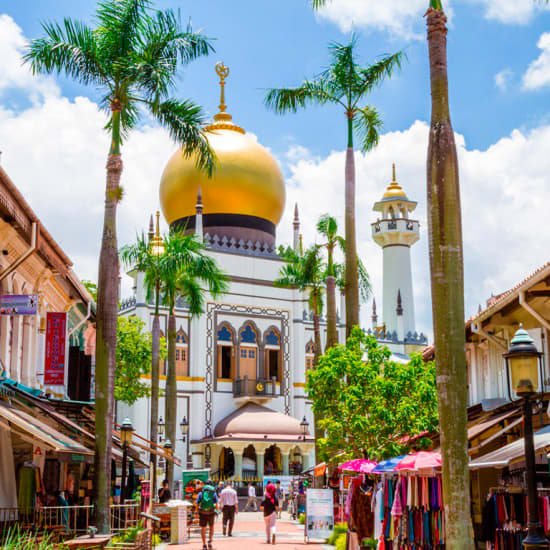
Start around 9:00 AM in Kampong Glam, reaching Sultan Mosque by MRT via Bugis or Nicoll Highway, followed by a short walk. The mosque is generally open to visitors outside prayer periods—dress modestly, with shoulders and knees covered; robes are usually available at the entrance. Allow about 45 minutes to admire the immense golden dome, peaceful prayer hall, and surrounding Malay heritage streets. Donations are welcome, and photography is fine in visitor areas when services are not taking place.
Continue on foot through Haji Lane, where colorful murals, independent fashion shops, record stores, and small cafés make for an easy late-morning wander. Most boutiques open around 11:00 AM, so this is a good place for coffee rather than an early breakfast; The Hangar is a dependable specialty-coffee stop nearby. From Kampong Glam, take the MRT from Bugis to Little India—about 10 minutes door to door—or use a short taxi if the heat is strong.
Afternoon — Little India
Visit Sri Veeramakaliamman Temple shortly after arriving in Little India, ideally between 1:00 and 2:00 PM, when the neighborhood is lively but less crowded than during the morning prayer rush. Entry is free, though remove your shoes, dress respectfully, and avoid photographing worshippers without permission. The richly painted gopuram and interior shrines are especially vivid in the afternoon light; allow roughly 45 minutes, while checking current visitor restrictions before entering.
Have lunch at Tekka Centre, just a few minutes away on foot. Choose a plate of biryani, dosai, roti prata, or a fresh sugarcane juice from the busy food stalls—expect approximately SGD10–30 per person, depending on how widely you sample. Take your time afterward around Serangoon Road and the nearby spice shops rather than adding another formal sight; the aromas, goldsmiths, flower garlands, and sari stores are the real Little India experience.
Evening — Chinatown Hawker Crawl
Head to Chinatown Complex Food Centre by MRT from Little India to Chinatown, usually about 15 minutes including the transfer and walk. Arrive around 6:00 PM, before the busiest dinner period, and take a lap before choosing what to eat: look for Singapore classics such as chicken rice, char kway teow, dumplings, satay, and local desserts. Budget approximately SGD15–40 per person for a generous tasting session. Seating is communal, and “chope” culture—placing a tissue packet on a table—still applies.
Keep the rest of the evening unstructured in Chinatown. Wander through the covered lanes around Smith Street and Pagoda Street, stopping for a drink wherever the atmosphere appeals. Return to your hotel by MRT or Grab; trains are frequent until late, while a private car is more comfortable after a full day of eating and walking. Carry small notes or use a local e-wallet/card where accepted, and bring water—Singapore’s humidity is easy to underestimate even on a relatively relaxed neighborhood day.
Pulau Ubin and Singapore nature
- Tanah Merah Ferry Terminal to Pulau Ubin — Changi; take a bumboat to the island, depart around 8:00 AM, ~15 minutes on the water plus waiting time.
- Pulau Ubin village and bicycle hire — Pulau Ubin; cycle through one of Singapore’s last rural landscapes, morning, ~2 hours.
- Chek Jawa Wetlands — Pulau Ubin; walk boardwalks through mangrove, coastal, and forest habitats, midday, ~2 hours.
- Quarry viewpoints — Pulau Ubin; see the island’s disused granite quarries and wildlife, afternoon, ~1 hour.
- New Ubin Seafood — Changi Village; enjoy Singaporean seafood and sharing dishes after returning from the island, approximately SGD50–120 per person.
Morning
Take a private car or Grab to Tanah Merah Ferry Terminal for an early 8:00 AM departure to Pulau Ubin. The bumboat crossing takes about 15 minutes and usually costs around SGD4 per person each way, with boats leaving when full rather than strictly to a timetable. Bring cash, water, sun protection, and mosquito repellent. After landing, walk into Pulau Ubin village and hire a bicycle—typically SGD8–15 for the day—then spend roughly two hours riding the island’s quiet lanes past old kampung homes, coconut palms, rubber trees, and small shrines. The terrain is manageable but uneven in places, so choose a geared bicycle and ask the rental shop to check the brakes.
Continue to Chek Jawa Wetlands, about 20–30 minutes by bicycle from the village. Allow two hours for the boardwalks and viewing tower, where mangrove, coastal forest, seagrass, and mudflat habitats meet; low tide offers the best chance of seeing small marine creatures, though wildlife is never guaranteed. There are very limited food and drink options on the island, so buy supplies before cycling out. Keep to marked paths and check the weather forecast—heavy rain can make the quarry roads slippery.
Afternoon and Lunch
On the return ride, stop at the quarry viewpoints, particularly around Pekeliling Quarry and the island’s other former granite pits. Allow about an hour for photographs and a slower look at the surrounding forest; monitor the paths for monkeys and avoid feeding any wildlife. Return your bicycle in Pulau Ubin village, then take the next available bumboat back to Tanah Merah Ferry Terminal. From there, have your driver take you to New Ubin Seafood in Changi Village—a short drive away—for a generous Singaporean seafood meal. Expect around SGD50–120 per person, depending on the seafood and sharing dishes ordered; call ahead to confirm the current branch hours and reserve a table, especially on a weekend. Finish with an unhurried walk around Changi Village before returning to central Singapore by car, normally 25–40 minutes outside peak traffic.
Singapore Grand Prix and race culture
- Singapore Grand Prix circuit walk — Marina Bay Street Circuit; inspect key corners and the race infrastructure before crowds build, morning, ~1.5 hours.
- Singapore Flyer — Marina Bay; see the circuit and city from above, late morning, ~1 hour.
- National Design Centre — Bras Basah; explore Singapore’s design culture between race activities, afternoon, ~1.5 hours.
- Singapore Grand Prix race-session hospitality — Marina Bay; attend the scheduled 2026 Formula 1 event session with premium grandstand or paddock hospitality, late afternoon/evening, ~4–6 hours.
- Lively race-night dining near Marina Bay — Marina Bay; reserve a restaurant inside or near the circuit, dinner, approximately SGD100–400 per person.
Morning
Begin early with a private car to the Marina Bay Street Circuit, ideally around 8:00 AM, before the roads close fully and the race crowds thicken. Walk a practical section of the circuit around Raffles Avenue, Esplanade Drive, and the waterfront corners, where you can see the temporary fencing, grandstands, pit infrastructure, and floodlighting that transform central Singapore for race week. Allow about 90 minutes, and carry your passport, ticket, and only a small bag—security restrictions and road closures can change quickly during the Grand Prix weekend. Check the official Singapore Grand Prix app for the day’s access map; some circuit sections may require a valid event ticket.
Continue to the Singapore Flyer, reached on foot if access remains open or by a short taxi ride around the closure zones. The 30-minute rotation gives excellent views over the circuit, Marina Bay, and the downtown skyline, while the air-conditioned capsule is a welcome break from the heat. Standard admission is usually around SGD40–45, with premium private capsules available at considerably higher rates; reserve a timed slot in advance because race-week demand is strong. Have a light lunch nearby rather than committing to a long meal—The Pelican or LAVO Singapore are convenient upscale choices, though reservations and event surcharges are common.
Afternoon
After lunch, take a taxi or private car to the National Design Centre in Bras Basah, allowing roughly 15–25 minutes depending on road closures. Spend about 90 minutes with the exhibitions and design shops, which offer a quieter look at Singapore’s creative culture after the spectacle of the circuit. Check the current exhibition schedule before going; galleries typically operate from late morning into the evening, but special race-week programming may alter access. Return toward Marina Bay by around 4:00 PM, leaving generous time for ticket checks, security screening, and finding your grandstand or hospitality entrance. Use the official event transport where possible, as taxis may be unable to cross closed roads.
Evening
Set aside four to six hours for the scheduled Singapore Grand Prix race-session hospitality. Premium grandstand and paddock-style packages usually include lounges, food, and drinks, but review the exact package carefully—some offer pit-lane access or post-session entertainment while others are tied to a specific grandstand. Wear breathable smart-casual clothing and comfortable shoes; ear protection is essential, even in hospitality areas. For dinner, reserve inside or immediately beside the circuit at Spago Bar & Lounge, CÉ LA VI Singapore, or Palm Beach Seafood Restaurant, budgeting roughly SGD100–400 per person before any race-week premium. Expect a lively, noisy evening and a slow exit after the session; pre-arrange a driver for a pickup point outside the secure perimeter, or walk toward City Hall or Raffles Place before requesting a car.
Final Singapore experiences
- Singapore Botanic Gardens — Tanglin; take a calm final walk through the UNESCO-listed garden, morning, ~2 hours.
- National Orchid Garden — Singapore Botanic Gardens; see Singapore’s signature orchid collection, ~1.5 hours.
- Tiong Bahru Market — Tiong Bahru; eat local breakfast and browse one of the city’s classic markets, late morning, approximately SGD10–30 per person.
- Jumbo Seafood, Riverside Point — Clarke Quay; have a final Singaporean chili-crab lunch, approximately SGD80–180 per person.
- Singapore to Kuala Lumpur transfer — Singapore to Kuala Lumpur; depart around 2:00 PM for a ~5–6-hour private road transfer or take a flight from Changi for a faster journey; arrange airport or hotel drop-off in Kuala Lumpur.
Morning
Make Singapore Botanic Gardens your final slow morning rather than trying to chase another landmark. Arrive around 8:00 AM, when the paths are cooler and joggers and gardeners are beginning their day. Enter from the Tanglin Gate and wander through the rainforest, ginger garden, and lakeside paths for about two hours. The gardens are free and generally open from 5:00 AM to midnight; bring water, sunscreen, and insect repellent. Continue to the National Orchid Garden, which usually opens at 8:30 AM and costs approximately SGD3 for adults. Allow 60–90 minutes for the coolhouses and orchid displays, including the VIP Orchid Garden—an especially fitting final cultural note for someone who appreciates horticulture and design.
Late Morning and Lunch
Take a 10–15-minute Grab to Tiong Bahru Market, arriving around 11:00 AM before the lunch rush becomes intense. Have a relaxed local breakfast or early lunch upstairs: look for chwee kueh, fishball noodles, roast meats, or a bowl of laksa, with most dishes costing SGD4–10. Walk a little through the surrounding Tiong Bahru streets afterward, where 1930s housing blocks, independent bookshops, bakeries, and cafés give the neighborhood a more lived-in feel than the central tourist districts. From there, a Grab to Jumbo Seafood, Riverside Point takes roughly 15–20 minutes, depending on traffic. Reserve ahead and order the signature chili crab, ideally with mantou for the sauce, plus another seafood dish to share; expect approximately SGD80–180 per person depending on the crab and wine.
Afternoon and Journey to Kuala Lumpur
Leave Clarke Quay around 2:00 PM for your private road transfer to Kuala Lumpur. The usual route is north through Johor Bahru via the Second Link or Woodlands Causeway, then onto Malaysia’s North–South Expressway; allow five to six hours in ideal conditions, but keep extra margin for both border crossings. Your driver should handle the vehicle lanes, while you keep your passport, Malaysian entry details, and luggage accessible for immigration. A private transfer offers the easiest door-to-door arrival, while a flight from Singapore Changi Airport is faster in the air but requires check-in and airport transfers. If driving, arrange a Kuala Lumpur hotel drop-off in advance and expect to arrive in the evening; avoid scheduling anything demanding after the border crossing.
No packing list attached yet.