8-Day Singapore, South Korea, and Japan Itinerary
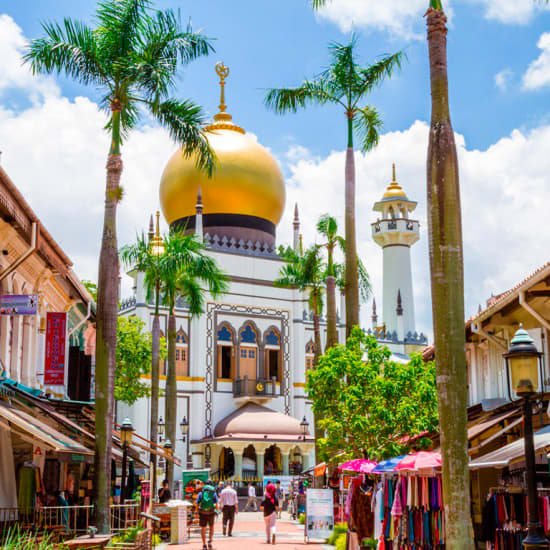
Stopover in Singapore
- Gardens by the Bay — Marina Bay; explore the conservatories and Supertree Grove in the morning, ~2.5 hours.
- Lau Pa Sat — Downtown Core; enjoy Singaporean hawker dishes for lunch, ~1 hour, S$10–25 per person.
- National Gallery Singapore — Civic District; see Southeast Asian art in the former Supreme Court and City Hall buildings, afternoon, ~2 hours.
- Singapore River Cruise — Clarke Quay; take a scenic ride past historic riverside landmarks, late afternoon, ~40 minutes.
- Maxwell Food Centre — Chinatown; sample chicken rice, satay, and local desserts for dinner, evening, ~1 hour, S$10–25 per person.
Morning
Start at Gardens by the Bay when it opens, ideally around 9:00 AM, before the conservatories become busy and the outdoor heat builds. Spend about 2½ hours between Cloud Forest and Flower Dome, then walk through Supertree Grove; the gardens themselves are free, while the two conservatories usually cost about S$32–53 for adults, depending on the ticket type. From central hotels, take the MRT to Bayfront and use Exit B, or arrive by taxi if you are carrying luggage. Bring water and a light layer—the conservatories are deliberately cool.
Lunch and Afternoon
Walk or take a short taxi ride to Lau Pa Sat, Singapore’s ornate Victorian food centre in the Downtown Core, for lunch around noon. Allow S$10–25 per person for dishes such as chicken rice, laksa, nasi biryani, or satay; the famous Satay Street stalls generally become liveliest later in the day, so choose from the indoor vendors at lunchtime. After eating, continue by MRT from Raffles Place to City Hall for the National Gallery Singapore. Set aside roughly two hours for its Southeast Asian collection, housed in the former Supreme Court and City Hall buildings; it is usually open daily from 10:00 AM to 7:00 PM, with admission commonly around S$20 for international visitors. The covered walkways and air-conditioning make this a good hot-afternoon stop.
Evening
From National Gallery Singapore, stroll down to Clarke Quay in about 15–20 minutes, or take a quick taxi if the weather is stormy. Board the Singapore River Cruise for a roughly 40-minute ride past Boat Quay, Marina Bay, and the old riverside warehouses; sunset departures are especially pleasant, though the exact schedule and fares—typically around S$28–30—can vary, so check the operator’s same-day timetable. Finish at Maxwell Food Centre in Chinatown, reached by MRT from Clarke Quay or by a short ride-hail trip, for dinner. Try Tian Tian-style chicken rice, satay, oyster cake, or a chilled dessert, budgeting S$10–25 per person; most stalls close by 8:00–9:00 PM, so arrive before 7:30 PM.
Travel to Seoul and evening exploration
- Singapore Changi Airport → Seoul Incheon Airport — Fly to Seoul; depart in the morning and allow roughly 6–8 hours total for flight, airport procedures, and transfer.
- Gwangjang Market — Jongno; try bindaetteok, mayak gimbap, and other street foods after checking in, evening, ~1.5 hours, ₩15,000–30,000 per person.
- Cheonggyecheon Stream — Jongno; take a relaxed illuminated evening walk through central Seoul, ~1 hour.
- Ikseon-dong Hanok Village — Jongno; browse renovated hanok lanes and cafés, evening, ~1.5 hours.
Arrival and Check-in
After landing at Incheon International Airport, allow about 60–90 minutes for immigration, baggage, and the airport transfer. The AREX all-stop or express train is the easiest way toward central Seoul; to Jongno, the train-and-subway connection takes roughly 70–90 minutes, while a pre-booked taxi is more comfortable with luggage but usually costs around ₩70,000–100,000. Check in, freshen up, and keep the evening central rather than trying to cover too much after the flight.
Evening at Gwangjang Market
Head first to Gwangjang Market, ideally around 6:00–7:00 PM, when the food stalls are lively but before the busiest late-evening crush. Focus on the central food alley and try a plate of bindaetteok, mayak gimbap, and perhaps mandu or fresh seafood; budget ₩15,000–30,000 per person, usually cash or local payment apps. Most food vendors operate into the evening, though individual stalls vary, so this is best treated as dinner rather than a quick snack. From the market, it is about a 10-minute walk to the next stop.
Cheonggyecheon and Ikseon-dong
Take a relaxed hour-long walk along Cheonggyecheon Stream, following the illuminated waterway west through central Seoul. The lower path is pleasantly cool after dark, but use the steps and bridges rather than trying to walk its entire length. Finish in Ikseon-dong Hanok Village, where narrow renovated hanok lanes are packed with small cafés, dessert shops, bars, and boutiques. Wander without a strict plan for about 1½ hours; the area is compact, but some lanes become crowded on summer evenings. Cafés commonly stay open until around 10:00–11:00 PM, and a final taxi or short subway ride back to your hotel is the simplest option after a long travel day.
Main sightseeing in Seoul
- Gyeongbokgung Palace — Jongno; visit Seoul’s grandest Joseon palace in the morning, ~2 hours.
- Bukchon Hanok Village — Jongno; walk its traditional residential lanes and viewpoints, late morning, ~1.5 hours.
- Insadong — Jongno; browse galleries, crafts, and tea shops, afternoon, ~1 hour.
- Jihwajin Makguksu — Jongno; try cold buckwheat noodles and Korean specialties for lunch, ~1 hour, ₩15,000–30,000 per person.
- N Seoul Tower — Namsan; see the city skyline from the observation area around sunset, ~2 hours.
Morning
Start early at Gyeongbokgung Palace, ideally around 9:00 AM when it opens, before the courtyards fill with tour groups and August heat becomes uncomfortable. Allow about two hours to see the throne hall, palace gates, and quieter rear gardens; admission is around ₩3,000, and wearing hanbok gives free entry if you have rented one nearby. Check the official schedule before leaving, as the palace is generally closed on Tuesdays. From Gyeongbokgung Station, it is an easy walk, and you can catch the 10:00 AM or 2:00 PM guard-changing ceremony if the timing works.
Walk east into Bukchon Hanok Village, roughly 15–20 minutes from the palace. This is still a lived-in residential neighborhood, so keep voices low and avoid blocking doorways while exploring the sloping lanes and small viewpoints. Spend about 90 minutes wandering, then continue downhill toward Insadong; the walk takes roughly 15 minutes. In Insadong, browse the craft shops, galleries, and side lanes around Insadong-gil, stopping for traditional tea if you want a break. Most shops open around 10:00–11:00 AM and close between 7:00 and 9:00 PM.
Lunch and Afternoon
Have lunch at Jihwajin Makguksu, a good Jongno stop for chilled buckwheat noodles and other Korean specialties. Expect roughly ₩15,000–30,000 per person; arrive before the main lunch rush, around 11:30 AM–12:00 PM, as seating can turn over quickly. After lunch, keep the afternoon unhurried in Insadong for about an hour—this is the best time to pick up handmade paper goods, ceramics, or small gifts rather than trying to cover another major sight.
Evening
For sunset, take a taxi from Insadong to the N Seoul Tower cable-car area, usually 15–25 minutes depending on traffic, or use Chungmuro Station and continue by bus or taxi toward Namsan. The cable car and observation deck are paid attractions, together typically costing around ₩20,000–30,000 depending on the ticket combination; allow extra time for queues, particularly on a clear summer evening. The observation area is most rewarding just before sunset, when the Han River and dense city blocks gradually light up. Bring water for the uphill sections, and check the sunset time and tower visibility on the day—summer haze can obscure the view.
Further sightseeing in Seoul
- War Memorial of Korea — Yongsan; explore Korea’s military history and large outdoor exhibits, morning, ~2.5 hours.
- National Museum of Korea — Yongsan; see major Korean archaeological, artistic, and historical collections, early afternoon, ~2.5 hours.
- Leeum Museum of Art — Itaewon; experience acclaimed Korean and international contemporary art, late afternoon, ~1.5 hours.
- Maple Tree House Itaewon — Itaewon; enjoy Korean barbecue for dinner, evening, ~1.5 hours, ₩40,000–80,000 per person.
- Itaewon — Itaewon; finish with a lively international neighborhood stroll, ~1 hour.
Morning
Begin at the War Memorial of Korea when it opens, usually around 9:30 AM, while the outdoor aircraft, tanks, and memorial grounds are still relatively quiet. Plan on about 2½ hours; the indoor galleries are extensive, so focus on the Korean War section and the large outdoor exhibits rather than trying to read everything. Admission is free, and Samgakji Station is the easiest arrival point—walk about five minutes from Exit 12. August is hot and humid, so bring water and use the indoor galleries as a break from the sun.
Early Afternoon
Walk or take a short taxi to the National Museum of Korea—the museum is roughly 20 minutes away on foot, but a taxi is more comfortable in the heat. Have lunch at the museum café or nearby in Ichon, then spend around 2½ hours with the Silla gold crowns, Buddhist sculpture, ceramics, and the central gallery’s major works. General admission is free, though special exhibitions cost extra; the museum is typically open Tuesday–Sunday from 10:00 AM, with later hours on some evenings. Check the exhibition schedule before leaving the hotel, as temporary displays can sell out.
Late Afternoon and Evening
From Ichon Station, take Line 4 toward Samgakji, change for Line 6, and continue to Hangangjin Station for the Leeum Museum of Art. Allow about 1½ hours for its Korean traditional, modern, and contemporary collections; timed entry is common, so reserve ahead and check the day’s opening hours, particularly because the museum is generally closed on Mondays. Afterward, walk downhill through Itaewon for dinner at Maple Tree House Itaewon. A barbecue meal usually runs about ₩40,000–80,000 per person, and reservations are wise for the evening. Finish with an unhurried stroll through Itaewon’s multicultural side streets around Gye리단-gil and Usadan-ro; it is liveliest after dinner, but keep some energy for the uphill sections and use a taxi if the heat is still oppressive.
Wilderness day trip from Seoul
- ITX-Cheongchun train: Yongsan Station → Gapyeong Station — Gapyeong; depart around 7:00–7:30 AM and allow roughly 1 hour, then use local buses or taxis.
- Nami Island — Gapyeong; walk wooded paths and riverside trails in a peaceful island setting, morning, ~2.5 hours.
- Dakgalbi restaurant district — Chuncheon; have the region’s signature spicy stir-fried chicken for lunch, ~1 hour, ₩15,000–30,000 per person.
- Gangchon Rail Park — Gapyeong/Gangchon; pedal a rail bike along the old railway beside the Bukhangang River, afternoon, ~1.5 hours.
- Garden of Morning Calm — Gapyeong; stroll landscaped gardens before returning to Seoul, late afternoon, ~2 hours.
- ITX-Cheongchun train: Gapyeong Station → Yongsan Station — Seoul; depart around 6:00–7:00 PM and allow roughly 1 hour, with a taxi from the garden to the station.
Morning
Take the ITX-Cheongchun from Yongsan Station to Gapyeong Station, ideally on a train departing around 7:00–7:30 AM. The journey takes about an hour; reserve seats in advance through Korail, as morning departures can fill quickly. From Gapyeong Station, take a taxi to the Nami Island ferry terminal—usually 10–15 minutes—or use the local shuttle if operating. The ferry crossing is short, and you should allow around 2½ hours on the island for the tree-lined lanes, riverside paths, and quieter northern sections. August is humid, so bring water, sun protection, and insect repellent; the island entrance and ferry package generally costs around ₩16,000–20,000.
Lunch and Afternoon
Return to the mainland and continue by taxi or local transport toward Chuncheon’s Dakgalbi restaurant district, where rows of restaurants specialize in the city’s famous spicy stir-fried chicken cooked at the table with cabbage, rice cakes, and noodles. Allow about an hour and expect to pay roughly ₩15,000–30,000 per person; Tongnamujib Dakgalbi is a dependable choice if you want a straightforward local meal. After lunch, head to Gangchon Rail Park for the pedal rail-bike course along the former railway beside the Bukhangang River. Book a timed session ahead—especially for a Friday in summer—and allow about 1½ hours, including transfers and the return shuttle.
Continue by taxi to the Garden of Morning Calm for the final stop, arriving in the late afternoon when the light softens and the gardens are more comfortable than at midday. Give yourself around two hours to wander the themed plantings, ponds, and shaded paths; admission is approximately ₩11,000. Before leaving, arrange a taxi to Gapyeong Station—the ride can take 25–40 minutes depending on traffic—and aim for the 6:00–7:00 PM ITX-Cheongchun back to Yongsan Station. Check the final train times before setting out, since missing the reserved return service can make the evening journey considerably slower.
Travel to Tokyo and evening exploration
- Seoul → Tokyo flight — Travel to Tokyo; take a morning flight and allow roughly 6–8 hours including airport transfer, check-in, and immigration.
- Senso-ji — Asakusa; visit Tokyo’s oldest temple and Kaminarimon gate after checking in, late afternoon, ~1.5 hours.
- Nakamise-dori — Asakusa; browse traditional snacks and souvenirs on the approach to Senso-ji, ~45 minutes.
- Hoppy Street — Asakusa; have casual izakaya dishes and drinks for dinner, evening, ~1.5 hours, ¥2,000–4,000 per person.
- Sumida River — Asakusa; take an evening riverside walk with views toward Tokyo Skytree, ~45 minutes.
Late Afternoon
After checking in, head to Asakusa and begin at Nakamise-dori, the traditional shopping street leading toward Senso-ji. Allow about 45 minutes to browse stalls selling ningyō-yaki cakes, rice crackers, folding fans, and small souvenirs; most shops close around 5:00–6:00 PM, so don’t leave this section too late. A roughly 10-minute walk from the street’s entrance brings you to Kaminarimon Gate and Senso-ji, where the temple grounds remain atmospheric into the evening even after the main shops and halls have closed. Spend about 1½ hours wandering the incense-filled courtyard, five-story pagoda area, and quieter side paths. Entry is free, though the main hall generally closes in the late afternoon; keep small cash handy for offerings and snacks.
Evening
For dinner, walk a few minutes to Hoppy Street, just west of Senso-ji, where compact izakaya spill onto the pavement and lanterns come on as the neighborhood cools down. Choose a busy, relaxed-looking place and order a light spread of yakitori, stewed beef tendon, sashimi, or monjayaki alongside the local Hoppy drink; budget approximately ¥2,000–4,000 per person. After dinner, take a 45-minute stroll along the Sumida River, starting near Azumabashi. The riverside promenade gives you clear nighttime views toward Tokyo Skytree, while the illuminated skyline makes this an easy, unhurried first evening in Tokyo. It is a pleasant 15–20-minute walk back toward central Asakusa afterward, or you can use Asakusa Station for the Ginza or Asakusa subway lines.
Main sightseeing in Tokyo
- Meiji Jingu — Harajuku; walk through its forested shrine grounds in the morning, ~1.5 hours.
- Takeshita Street — Harajuku; explore youth fashion, sweets, and colorful shops, late morning, ~1 hour.
- Kiddy Land Harajuku — Omotesando; browse Japan-focused character and toy collections, ~1 hour.
- Omotesando — Aoyama; enjoy architecture, flagship stores, and a café break, afternoon, ~1.5 hours.
- Tsukiji Outer Market — Tsukiji; sample sushi, tamagoyaki, and seafood snacks for an early dinner, ~1.5 hours, ¥2,500–5,000 per person.
- teamLab Planets TOKYO — Toyosu; experience immersive digital art installations in the evening, ~2 hours.
Morning
Start at Meiji Jingu around 8:00–8:30 AM, before Tokyo’s humidity rises and the shrine paths become busy. From Harajuku Station, walk through the broad forested approach to the shrine; allow about 1½ hours for the torii gates, sake-barrel display, main courtyard, and a quiet stroll beneath the trees. Entry to the grounds is free, though the inner garden has a separate fee of roughly ¥500 and is most worthwhile if you want a slower, more botanical walk. From the shrine exit, it is only a few minutes to Takeshita Street. Spend about an hour browsing its tightly packed fashion shops, photo booths, crepe stands, and colorful snack counters; it is liveliest later in the morning, but also noticeably more crowded, so keep bags close and avoid stopping in the center of the street.
Walk south toward Kiddy Land Harajuku, roughly 15 minutes away, passing through the changing streets around Omotesando. Give yourself an hour inside the multi-level shop, where character goods, Japanese toys, stationery, and seasonal collaborations make good souvenirs without requiring a major shopping plan. Continue into Omotesando for an unhurried afternoon—look up at the distinctive contemporary buildings and browse the flagship stores rather than trying to cover every side street. For a café break, Blue Bottle Coffee Aoyama is a dependable stop, while Koffee Mameya is better for carefully prepared Japanese beans. The walk from Kiddy Land to the main Omotesando avenues is immediate, and the whole area is easy to explore on foot; budget around ¥600–1,500 for coffee and a light snack.
Evening
Take the Tokyo Metro from Omote-sando Station toward Tsukiji, changing at Ginza if needed, and allow about 20–25 minutes. Arrive at Tsukiji Outer Market around 4:30–5:00 PM for an early dinner, since many individual stalls close by late afternoon or early evening. Wander the narrow lanes around Namakiyoke Street, trying a small sushi set, grilled seafood, and freshly made tamagoyaki rather than committing to one large meal; ¥2,500–5,000 per person is realistic. Cash is still useful, queues can be informal, and the market is more enjoyable if you share several small portions. From Tsukiji, take the Hibiya Line and Yurikamome connection toward Toyosu—allow roughly 30–40 minutes—to reach teamLab Planets TOKYO for a timed evening entry. Reserve tickets well ahead for this date, arrive 15–20 minutes early, and wear clothing that can be rolled above the knees; the barefoot water installations are part of the experience, and the visit takes about two hours. Expect admission to be approximately ¥3,800–5,400 depending on the ticket date and age category.
Tokyo sightseeing and departure
- Tokyo Skytree — Sumida; begin with panoramic views over Tokyo, morning, ~1.5 hours.
- Tokyo Solamachi — Sumida; shop and have lunch beneath the Skytree, ~1.5 hours, ¥1,500–3,000 per person.
- Edo-Tokyo Museum — Ryogoku; learn how Tokyo developed through detailed historical displays, early afternoon, ~2 hours.
- Ueno Park — Ueno; take a final relaxed walk through one of Tokyo’s major cultural districts, afternoon, ~1 hour.
- Ueno → Tokyo airport — Travel to Narita or Haneda; leave at least 3–4 hours before an international departure, allowing extra time for luggage and airport check-in.
Morning
Start at Tokyo Skytree shortly after opening, ideally around 8:00–9:00 AM, when visibility is often better and queues are lighter. From central Tokyo, take the Tobu Skytree Line to Tokyo Skytree Station or the Hanzomon Line to Oshiage Station; both connect directly with the complex. Allow about 1½ hours for the Tembo Deck and, if visibility is excellent, the higher Tembo Galleria. Standard admission is roughly ¥2,100–3,100 depending on the areas and date, and timed tickets are sensible during weekends or summer holidays. Look for the broad curve of the Sumida River, Asakusa to the west, and—on a very clear day—Mount Fuji in the distance.
Lunch and Afternoon
Stay downstairs at Tokyo Solamachi for lunch and a little shopping rather than rushing elsewhere. The complex has everything from casual soba and sushi counters to food-court options; Rokurinsha is a good choice for tsukemen, while the basement food hall is useful for a quick, inexpensive meal. Budget ¥1,500–3,000 per person and allow about 1½ hours. Then take the Toei Subway Asakusa Line from Oshiage to Kuramae, changing or walking onward toward Ryogoku—the trip takes roughly 15–25 minutes. Spend around two hours at the Edo-Tokyo Museum, whose reconstructed streets, theatrical exhibits, and everyday objects make Tokyo’s transformation especially easy to understand. Check the museum’s current reopening status and hours before setting out, as it has undergone extended renovation periods; admission is typically around ¥600–1,000 when operating.
Late Afternoon and Departure
Finish with an unhurried walk through Ueno Park, reached from Ryogoku by the JR Sobu Line to Akihabara and then the JR Yamanote or Keihin-Tōhoku Line to Ueno, usually about 25 minutes. Keep this to an hour: stroll around the ponds and tree-lined paths, and pause near Shinobazu Pond if the heat is manageable. For Haneda Airport, allow roughly 35–50 minutes from Ueno by the Keikyu Line via Shinagawa or by a convenient JR-and-monorail connection; for Narita Airport, the Keisei Skyliner from Keisei-Ueno takes about 40–45 minutes. Leave the park at least 3–4 hours before an international flight, adding time to collect luggage, reach the correct terminal, and complete airline check-in.