8-Day Munich and Rome Itinerary
Arrival and orientation in Munich
- Munich Airport to Hauptbahnhof — Airport–city center; from your arrival, take the S-Bahn to München Hauptbahnhof, then leave luggage at your hotel, ~45–60 minutes.
- Stachus (Karlsplatz) — Altstadt; begin orientation at Munich’s lively central square and pedestrian gateway, ~30 minutes, early afternoon.
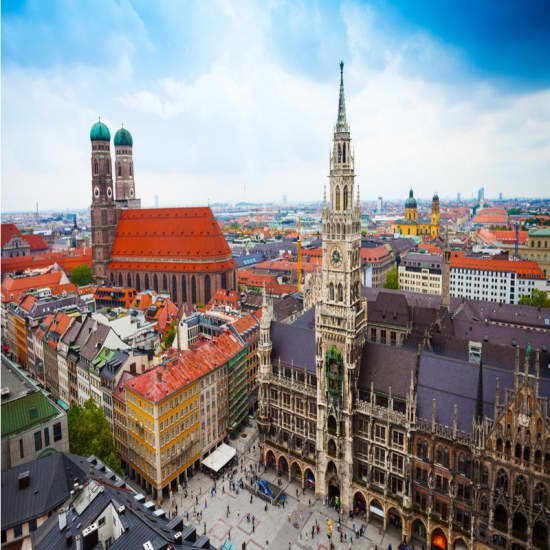
- Marienplatz and Neues Rathaus — Altstadt; see the city’s iconic square and Gothic town hall, ~45 minutes.
- Viktualienmarkt — Altstadt; sample Bavarian specialties and browse the historic food market, ~1 hour, late afternoon.
- Augustiner am Platzl — Altstadt; enjoy classic Bavarian food and beer near the Hofbräuhaus area, dinner, approximately €25–40 per person.
Arrival and getting settled
From Munich Airport, take the S-Bahn toward the city center—both the S1 and S8 serve München Hauptbahnhof, with the S8 usually taking around 40–45 minutes. Trains run frequently, and the airport-to-city ticket is roughly €14–16; buy it from the machines or the MVV app. After leaving your luggage at the hotel, allow a little time to reset before heading out. If you have bulky bags, Hauptbahnhof is also well connected to the old town by tram, U-Bahn, and a straightforward 15-minute walk.
Early afternoon: the old-town orientation
Start at Stachus (Karlsplatz), Munich’s busy western gateway to the pedestrian center. Take about 30 minutes to get your bearings beneath the Karlstor gate, then follow Neuhauser Straße east toward Marienplatz. This is an easy, mostly pedestrianized walk of about 10–15 minutes. At Marienplatz, spend time looking up at the ornate Neues Rathaus and its famous Glockenspiel; the square is most atmospheric once the initial commuter rush has eased. The Glockenspiel performs at 11:00 and 12:00, and additionally at 17:00 from March through October, though the square is worth visiting at any hour.
Late afternoon and dinner
Continue a few minutes south to Viktualienmarkt, where Munich’s food stalls make an excellent first-day introduction to Bavarian eating. Browse the butchers, cheese counters, bakeries, and seasonal produce, then try a small snack such as a Leberkäse roll, pretzel, or local sausage. Most stalls operate roughly Monday–Saturday during daytime hours, but individual vendors vary, so arrive before about 18:00 for the fullest selection. For dinner, walk north toward Augustiner am Platzl, near the Hofbräuhaus area. Order a roast pork dish, schnitzel, or seasonal special with Augustiner beer; expect about €25–40 per person. It is popular and can fill quickly, so arriving around 17:30–18:00 is easier than waiting for the main dinner rush. Afterward, keep the evening gentle—a short wander through the surrounding Altstadt streets is plenty for an arrival day.
Munich city highlights
- Nymphenburg Palace — Neuhausen-Nymphenburg; tour the former Wittelsbach summer residence and gardens, morning, ~2.5 hours.
- Hirschgarten — Neuhausen; have lunch in the world’s largest beer garden and relax among chestnut trees, ~1.5 hours, approximately €15–25 per person.
- Frauenkirche — Altstadt; visit Munich’s landmark twin-towered cathedral, afternoon, ~45 minutes.
- Residenz München — Altstadt; explore the richly decorated royal residence and treasury, ~2 hours.
- Dallmayr Delicatessen — Altstadt; browse Munich’s elegant gourmet institution and stop for coffee or cake, late afternoon, ~45 minutes, approximately €10–20 per person.
Morning
Start at Nymphenburg Palace, arriving around 9:00–9:30 a.m. Take tram 17 from München Hauptbahnhof or the city center toward Amalienburgstraße; the ride takes roughly 20 minutes, followed by a short walk. Allow about 2½ hours for the palace apartments, carriage museum, and formal gardens. The palace interior generally opens around 9:00 a.m. in summer, with combined tickets costing approximately €15–17; the park itself is free and worth exploring beyond the main fountain axis, especially around the smaller garden palaces. Go early for a calmer visit, and check the official opening schedule before setting out, as individual buildings can have different hours.
Lunch and Afternoon
Walk or take a short tram ride to Hirschgarten, where the enormous chestnut-shaded beer garden is ideal for a relaxed lunch. Choose a table beneath the trees and order classic Bavarian food such as roast chicken, pretzels, or sausages with a Maß of beer; budget roughly €15–25 per person. You can buy food from the self-service counters, and bringing a little cash is useful. After lunch, take the S-Bahn or tram toward Marienplatz—allow around 25–35 minutes—and visit Frauenkirche, Munich’s landmark cathedral. Entry is usually free for visitors when services are not taking place; keep the visit quiet and modestly dressed, and look for the famous “devil’s footprint” near the entrance.
Continue on foot to Residenz München, about 10 minutes away through the Altstadt. Set aside two hours for the ceremonial rooms, Antiquarium, and treasury; the summer opening period is typically until early evening, with admission around €10–15 depending on the combination ticket. The route is compact, so this is a good point to wander through the surrounding lanes rather than rushing between rooms.
Late Afternoon and Evening
Finish at Dallmayr Delicatessen, a few minutes’ walk from the Residenz. Browse the beautifully arranged counters for chocolates, coffee, spices, and regional specialties, then take a break at the café for cake or a proper coffee—expect about €10–20 per person. It usually closes in the early evening, so arrive no later than 5:00 p.m. if you want time to browse. From here, Marienplatz and München Hauptbahnhof are easy to reach on foot or by U-Bahn; keep the evening unplanned, perhaps returning to the Altstadt for dinner after the day’s sightseeing.
Museums and neighborhoods in Munich
- Lenbachhaus — Maxvorstadt; see an outstanding collection of modern art, especially the Blue Rider group, morning, ~2 hours.
- Pinakothek der Moderne — Maxvorstadt; continue with modern art, design, architecture, and graphics, ~2 hours.
- Türkenstraße — Maxvorstadt; take a relaxed neighborhood walk through one of Munich’s best café and restaurant streets, ~45 minutes.
- English Garden — Schwabing; stroll through Munich’s expansive central park and watch surfers at the Eisbachwelle, afternoon, ~1.5 hours.
- Seehaus im Englischen Garten — English Garden; dine beside the Kleinhesseloher See in a scenic park setting, evening, approximately €25–45 per person.
Morning
Start at Lenbachhaus in Maxvorstadt, ideally around 9:30 a.m. The museum is Munich’s essential stop for Der Blaue Reiter—look for works by Kandinsky, Gabriele Münter, and Paul Klee—as well as the striking contemporary wing. Plan on about two hours. It is generally open Tuesday through Sunday from late morning, with a later opening on some days, so check the September 2026 schedule before setting out; admission is typically around €10–15. From central Munich, take the U-Bahn to Königsplatz and walk a few minutes.
Continue on foot to Pinakothek der Moderne, roughly 10 minutes away. Give yourself another two hours for its four collections spanning modern art, design, architecture, and graphic arts. The building is large and easy to underestimate, so choose a few sections rather than trying to absorb everything. Standard admission is usually about €10, with reduced-price Sunday admission sometimes available; confirm opening hours, as the museum is commonly closed on Mondays. Buy a drink or pastry nearby if you need a short break before continuing.
Afternoon and Evening
Walk down Türkenstraße, one of Maxvorstadt’s best streets for an unhurried neighborhood wander. Spend about 45 minutes browsing the independent shops and café terraces, then head toward the English Garden—a pleasant 20–25-minute walk, or take the U-Bahn toward Universität and continue north on foot. Enter near the southern end and make your way to the Eisbachwelle, where surfers ride the standing wave year-round; watch from the banks and keep well back from the water. Continue through the park for about 1½ hours toward Kleinhesseloher See, where Seehaus im Englischen Garten makes a relaxed dinner stop beside the lake. Reserve if you want a terrace table, and expect roughly €25–45 per person. From there, buses or the U-Bahn from nearby Münchner Freiheit return you to central Munich; allow 25–35 minutes.
Transition from Munich to Rome
- Munich to Rome by air — Munich Airport to Rome Fiumicino; allow roughly 4.5–6 hours door-to-door including airport procedures, departing in the morning and taking the Leonardo Express or taxi onward from Fiumicino.
- Hotel check-in and Campo de’ Fiori — Centro Storico; settle in, then explore the historic square and surrounding lanes, late afternoon, ~1 hour.
- Piazza Navona — Centro Storico; admire Bernini’s Fountain of the Four Rivers and Rome’s grand Baroque setting, ~45 minutes.
- Pantheon — Centro Storico; visit one of antiquity’s best-preserved monumental buildings, ~1 hour.
- Roscioli Salumeria con Cucina — Centro Storico; enjoy Roman specialties and an extensive deli selection, dinner, approximately €40–70 per person.
Arrival and check-in
After the morning flight from Munich to Rome, allow roughly 30–45 minutes from Fiumicino Airport to the Centro Storico once you have your bags. The Leonardo Express reaches Termini in 32 minutes (€14), but a taxi’s fixed €48 fare to central Rome is often more convenient if you have luggage or your hotel is beyond the station. Check in, take a short break, and aim to be out again around 4:00 p.m.; September afternoons can still be warm, so keep the first walk easy.
Late afternoon wandering
Begin at Campo de’ Fiori, when the market stalls have gone and the square shifts into its livelier aperitivo mood. Spend about an hour browsing the surrounding lanes toward Via dei Cappellari and Via dei Giubbonari, resisting the urge to pack in too much on arrival day. From the square, it is about a 10-minute walk to Piazza Navona. Take time to admire Bernini’s Fountain of the Four Rivers, the church façade of Sant’Agnese in Agone, and the square’s elegant Baroque proportions; late afternoon is a particularly good time for photographs and people-watching.
Continue five minutes east to the Pantheon, where the ancient dome and oculus are most impressive once you are inside. Entry is generally around €5, and modest dress is required because it remains a consecrated church; check the official schedule before going, as services can affect access. The visit takes about an hour, including the exterior details in Piazza della Rotonda.
Dinner
Walk roughly 12 minutes to Roscioli Salumeria con Cucina for dinner. Reserve ahead—this is one of Rome’s hardest tables, especially for the classic dining room—and expect approximately €40–70 per person before drinks. Order a Roman pasta such as carbonara or cacio e pepe, and leave room for the salumi and cheese selection. After dinner, enjoy an unhurried walk back through the Centro Storico rather than adding another sight; tomorrow’s ancient-Rome day will be much better with a relaxed first evening.
Ancient Rome
- Colosseum — Monti; tour Rome’s defining ancient amphitheater with a timed entry, morning, ~1.5 hours.
- Roman Forum and Palatine Hill — Ancient Rome; walk through the political heart of ancient Rome and its legendary hill, late morning, ~2.5 hours.
- Arch of Constantine — Colosseum Valley; see the imposing triumphal arch immediately beside the Colosseum, ~20 minutes.
- Basilica di San Clemente al Laterano — Celio; descend through layers of Roman history beneath this remarkable basilica, afternoon, ~1 hour.
- La Taverna dei Fori Imperiali — Monti; have a traditional Roman dinner close to the ancient sites, approximately €30–50 per person.
Morning
Start at the Colosseum with a timed entry around 8:30–9:00 a.m., before the valley becomes crowded and the September sun gets strong. Allow about 1½ hours for the amphitheater; official combined tickets generally start around €18, with guided tours costing more, and an ID check may be required for named tickets. From there, walk directly into the Roman Forum and Palatine Hill for roughly 2½ hours. Bring water and wear shoes with good grip—the ancient paving is uneven, shade is limited, and there are steep stretches on the Palatine. The combined archaeological-area ticket normally covers all three sites, but check the ticket’s exact entry rules when booking.
Lunch and Afternoon
Pause for a quick lunch in Monti before continuing; Ai Tre Scalini on Via Panisperna is a dependable choice for a panino, salad, or glass of wine, though it can be busy at midday. Then return toward the Colosseum Valley to spend about 20 minutes at the Arch of Constantine, whose sculpted reliefs are particularly impressive from the side facing the Forum. Continue on foot to Basilica di San Clemente al Laterano, about 10 minutes away along Via di San Giovanni in Laterano. Its underground levels—an early Christian basilica and a Roman house with a Mithraic shrine—are the day’s hidden highlight; allow an hour and check the posted visiting schedule, as the lower excavations sometimes close between sessions. Admission is usually around €10.
Evening
Walk back through Celio and Monti for dinner at La Taverna dei Fori Imperiali, a small, traditional Roman restaurant near Via della Madonna dei Monti. Reserve ahead, especially for a Friday evening, and expect approximately €30–50 per person before wine. Order a classic Roman pasta or a seasonal second course rather than trying to fit in another monument—the ancient streets around Via dei Fori Imperiali are especially atmospheric after dark, when the crowds thin and the ruins are illuminated.
Historic center of Rome
- Trevi Fountain — Trevi; see Rome’s most famous fountain early, before the busiest crowds, morning, ~30 minutes.
- Galleria Borghese — Villa Borghese; view masterpieces by Bernini, Caravaggio, and Titian with a timed reservation, ~2 hours.
- Villa Borghese Gardens — Pinciano; walk or relax among the gardens after the museum, ~1 hour.
- Spanish Steps — Spagna; descend Rome’s celebrated staircase and browse the surrounding streets, ~45 minutes.
- Pizzarium Bonci — Prati; sample inventive Roman pizza al taglio for a casual dinner, approximately €10–20 per person.
Morning
Start at Trevi Fountain around 7:30–8:00 a.m., when the marble basin is usually much easier to appreciate than later in the day. Spend about 30 minutes taking in Nicola Salvi’s fountain, but don’t linger on the steps or block the central viewing area—local police are strict about sitting on the monument and eating nearby. From here, walk roughly 20 minutes north through the lanes around Via del Tritone and Via Sistina toward Villa Borghese. Have a quick coffee and cornetto en route; Caffè Canova-Tadolini on Via del Babuino is a handsome, slightly theatrical option if you want to stretch the walk.
Reserve a timed entry at Galleria Borghese for about 10:00 a.m. Reservations are essential, and visits are generally limited to two-hour slots; admission is commonly around €15–20 before optional booking fees. The collection is compact but extraordinary, especially Bernini’s Apollo and Daphne and Caravaggio’s Saint Jerome Writing. Arrive 20–30 minutes early to collect or check bags—large bags and backpacks usually must be left in the cloakroom. Afterward, stay in Villa Borghese Gardens for an unhurried hour: follow the paths toward the Pincio Terrace rather than trying to cover the whole park, and bring water because shade is uneven in September.
Afternoon and Evening
Walk down from the Pincio Terrace to the Spanish Steps, a pleasant 15-minute descent through Piazza del Popolo and the elegant streets of the Campo Marzio. Spend about 45 minutes around Piazza di Spagna, browsing Via dei Condotti and the smaller lanes toward Via della Croce. The staircase itself is for sitting only briefly—eating and drinking on it are prohibited—and the area is busiest from late morning onward, so this is a good point to wander rather than force more sightseeing. For dinner, take Metro A from Spagna toward Ottaviano and walk to Pizzarium Bonci in Prati; allow about 25–30 minutes door to door. Order pizza by weight, choosing a few different toppings to share; expect roughly €10–20 per person, and plan on a lively, standing-or-quick-seat meal rather than a long restaurant dinner.
Vatican City and Prati
- Vatican Museums and Sistine Chapel — Vatican City; tour one of the world’s great art collections with a timed entry, morning, ~3 hours.
- St. Peter’s Basilica — Vatican City; see Michelangelo’s Pietà and the vast Renaissance interior, early afternoon, ~1.5 hours.
- Castel Sant’Angelo — Prati; explore the papal fortress and enjoy views over the Tiber, ~1.5 hours.
- Ponte Sant’Angelo — Sant’Angelo; cross Rome’s most scenic bridge among Bernini-designed angel sculptures, ~30 minutes.
- Osteria da Fortunata – Rinascimento — Centro Storico; enjoy handmade pasta in a traditional Roman trattoria, dinner, approximately €25–45 per person.
Morning
Book a timed entry to the Vatican Museums and Sistine Chapel for around 8:00–8:30 a.m.; this is the best way to see the galleries before the main tour groups arrive. Enter from Viale Vaticano and allow about three hours, including the Raphael Rooms, the long gallery corridors, and the Sistine Chapel. Tickets bought through the official Vatican Museums website are typically about €20 before booking fees; dress with shoulders and knees covered, and bring only a small bag, since security can take time. Afterward, walk roughly 15 minutes around the Vatican walls toward St. Peter’s Basilica—the entrance is separate, and the basilica is generally free, though security lines can be substantial. Allow about 1½ hours for Michelangelo’s Pietà, the enormous nave, and the tombs; the dome is worthwhile if you still have energy, but it adds time and a separate ticket.
Afternoon
For lunch, stay in Prati rather than eating directly beside the Vatican, where prices are inflated. Il Sorpasso near Via Properzio is a good choice for a relaxed Roman lunch, with cured meats, seasonal dishes, and pasta; expect roughly €20–35 per person. Then walk about 20 minutes southeast to Castel Sant’Angelo, following the broad riverfront where possible. The former mausoleum and papal fortress usually takes around 1½ hours, and its upper terrace gives you one of the finest views toward St. Peter’s dome and the Tiber. Check the official schedule before going—opening days and last admission can vary—and expect approximately €17–20 for entry.
Evening
Exit toward Ponte Sant’Angelo and spend half an hour crossing slowly among the ten Bernini-designed angel sculptures; late afternoon light is especially good on the river and fortress. Continue into the Centro Storico for dinner at Osteria da Fortunata – Rinascimento on Via del Pellegrino. The handmade pasta is prepared where you can see it, and classics such as cacio e pepe or carbonara usually run about €15–20, with a full meal around €25–45 per person. It is popular and tables are close together, so arrive around 7:00 p.m. or expect a wait; afterward, leave time for an unhurried walk through the nearby lanes rather than adding another major sight.
Final day in Rome
- Testaccio Market — Testaccio; start with a lively local food market and an informal breakfast or snack, morning, ~1 hour, approximately €8–15 per person.
- Monte Testaccio — Testaccio; see the unusual ancient mound formed from discarded Roman amphorae, ~30 minutes.
- Cimitero Acattolico — Testaccio; visit the peaceful historic cemetery near the Pyramid of Cestius, ~1 hour.
- Basilica di San Paolo fuori le Mura — Ostiense; admire one of Rome’s grandest basilicas outside the ancient walls, ~1.5 hours.
- Rome to airport or onward destination — Ostiense/Fiumicino or Ciampino; collect luggage and allow roughly 45–90 minutes to the airport depending on terminal and traffic.
Morning
Begin at Testaccio Market, ideally around 8:30–9:00 a.m., when the neighborhood is waking up and the stalls are well stocked. It is a particularly good place for a relaxed final breakfast: look for coffee, pastries, fresh fruit, or a small savory bite such as a filled pizza or porchetta sandwich. Allow about an hour and budget €8–15. The market is generally open in the morning on weekdays, but individual vendors keep their own schedules, so earlier is better. Afterward, walk a few minutes through Testaccio to Monte Testaccio, the remarkable hill made from millions of broken Roman amphorae. The mound itself is not freely climbable, but you can appreciate its scale from the surrounding streets; allow roughly 30 minutes.
Continue toward the Cimitero Acattolico, near Piramide and the old Porta San Paolo. This quiet cemetery is one of Rome’s most atmospheric corners, with cypress trees, weathered tombs, and the graves of poets including John Keats and Percy Bysshe Shelley. Check the current visiting hours before setting out—access is commonly limited to morning and early-afternoon periods, with a modest donation requested—and dress respectfully. From there, walk or take a short bus ride along Via Ostiense to the Basilica di San Paolo fuori le Mura. Set aside about 1½ hours to admire the immense nave, golden apse mosaic, marble colonnades, and portraits of the popes. Entry to the basilica is free, though the cloister and any museum areas may charge separately; shoulders and knees should be covered.
Departure
Once you finish at San Paolo, collect your luggage and leave a generous buffer for the airport. From the nearby Basilica San Paolo Metro station, Line B reaches Roma Termini in about 15 minutes, where you can connect with the Leonardo Express to Fiumicino Airport—allow roughly 45–60 minutes from the basilica area, plus airport check-in time. A taxi or pre-booked transfer is more convenient with bags, particularly if departing from Ciampino, but allow at least 60–90 minutes for traffic. For a flight within the Schengen area, aim to reach the airport around two hours before departure; allow closer to three hours for a non-Schengen flight.